Why Arthritis Is Not the End of the Story
If you’ve been told you have arthritis, degenerative joint disease, or degenerative disc disease, you were probably also told some version of this:
“It’s wear and tear.”
“It only gets worse with age.”
“You just have to manage the pain.”
As a nurse and Pilates teacher with many years of experience working with bodies, I want to gently but clearly challenge that narrative.
This article is not about false hope or miracle cures. It is about restoring trust in the body’s intelligence and understanding how joints actually function, adapt, and respond to their environment.
Bones, joints, and discs are alive. And when you change the inputs—movement, position, circulation, hydration, nerve supply, and load—you can change the output.
I’ve seen it in my clinical practice. I’ve seen it in my Pilates studio. And I’ve learned it through my own continuing education, including teachings from Dr. John Bergman.
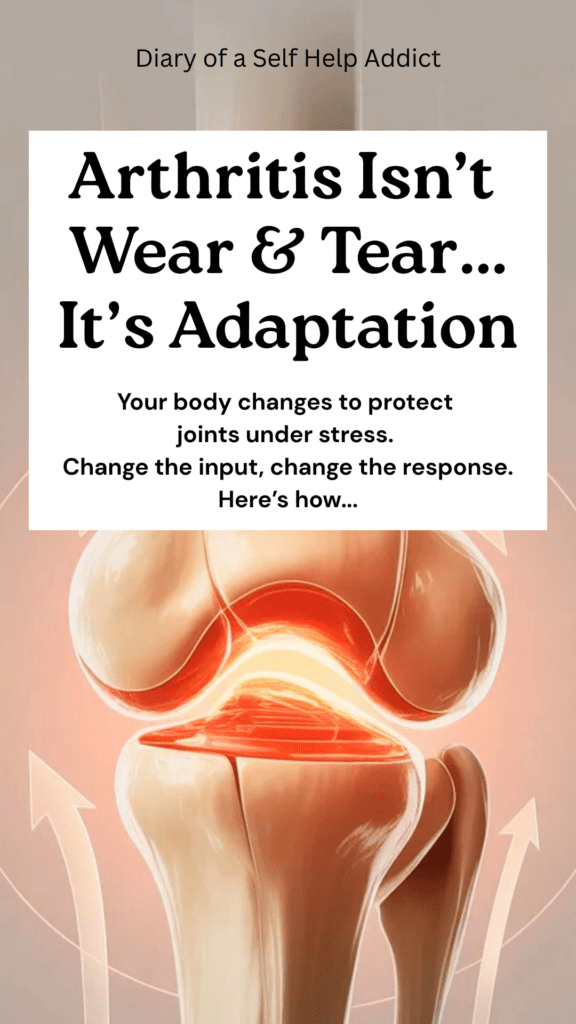
Arthritis is not simply something that “happens” to you. It is often the body’s adaptive response to long-standing stressors.
Let’s talk about what arthritis really is and what actually helps.
What Is Arthritis, Really?
“Arthritis” is an umbrella term that simply means inflammation or degeneration of a joint. There are many types, but the most common ones people are diagnosed with include:
Osteoarthritis (OA)
Often labeled as “wear and tear,” osteoarthritis involves changes to cartilage, joint spacing, bone surfaces, and synovial fluid quality.
Degenerative Joint Disease (DJD)
This term is often used interchangeably with osteoarthritis and refers to structural changes that occur over time when joints are not receiving the nutrients they need to remain healthy.
Degenerative Disc Disease (DDD)
Despite the scary name, this is not actually a disease. It describes changes in spinal discs, such as reduced disc height, dehydration, or stiffness, that occur when discs lose their ability to efficiently absorb and distribute forces.
Here’s the part that often gets missed:
Degeneration is not the same thing as decay.
Degeneration is the body adapting to stress.
Related Read: RELIEVE BACK PAIN AT HOME WITH A TENNIS BALL: MYOFASCIAL RELEASE MADE SIMPLE
Joints, Discs, and Cartilage Are Alive
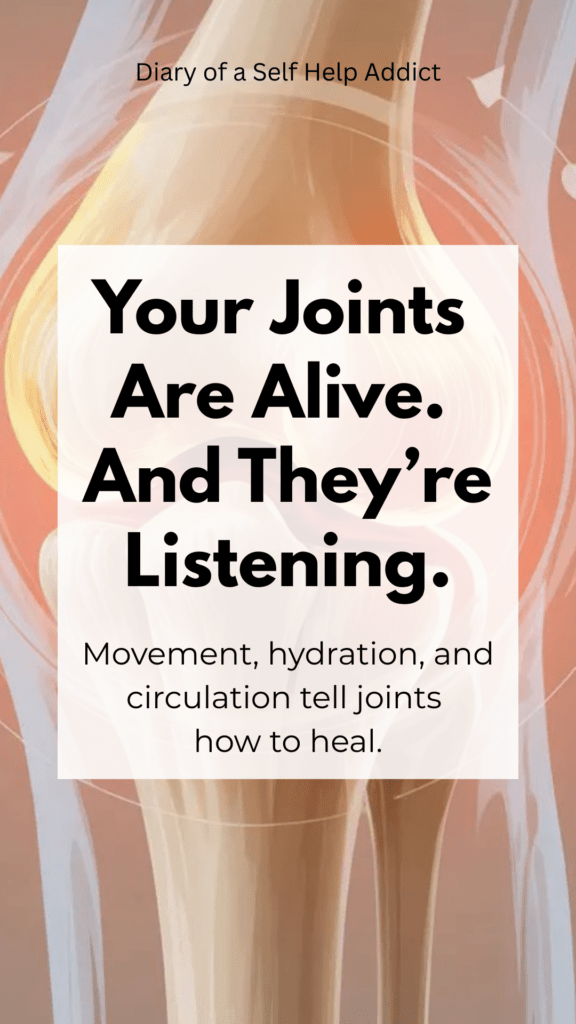
You’ll often hear that cartilage and spinal discs are “avascular,” meaning they do not have a direct blood supply.
That part is true.
But what is often implied—incorrectly—is that they are therefore dead or incapable of improvement.
That is not true.
Avascular Does NOT Mean Acellular
Cartilage and discs may lack their own blood vessels, but they do contain living cells. Those cells rely on:
- Diffusion of nutrients
- Movement of synovial and interstitial fluid
- Mechanical loading and unloading
- A healthy nerve supply
When movement is appropriate and varied, nutrients are delivered to these tissues and waste products are removed.
When movement is limited, compressed, or repetitive in one direction only, that fluid exchange suffers.
This is why motion matters more than people realize. (Just another reason I love Pilates… because we move the whole body in all different planes of movement every time.)
Why “It Can’t Be Reversed” Is an Oversimplification
Is it realistic to say every joint can return to a perfect, 20-year-old X-ray?
No.
But is it accurate to say joints and discs can never improve once degeneration is present?
Also no.
The body is constantly regenerating itself:
- Your blood is brand new roughly every 120 days
- Most tissues in the body renew over time
- Joint cells respond to their environment
In fact, no joint in your body is older than about 7–8 years due to ongoing cellular turnover.
What determines whether new tissue is healthy or compromised?
The conditions under which it is built.
Pain Is Information, Not Punishment
One of the most important mindset shifts I encourage clients to make is this:
The body is not attacking you. It is communicating with you.
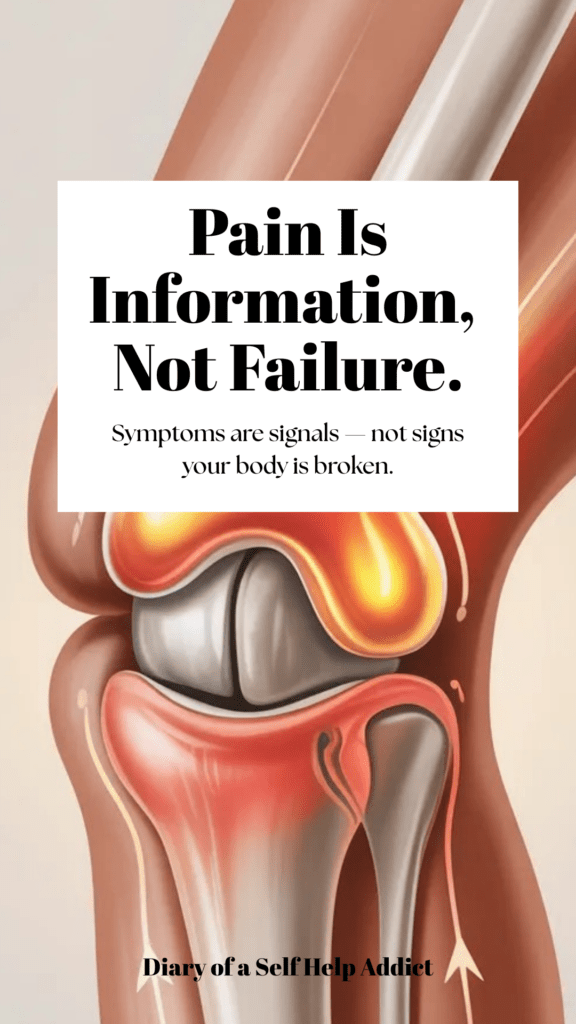
Pain, bone spurs, bunions, calcifications, stiffness, even elevated blood pressure—these are adaptive responses to different stressors.
They are signals that something in the system needs attention.
For joints specifically, the body adapts when:
- There is excessive compression
- There is a lack of movement
- There is dehydration
- There is poor blood quality
- There is nerve irritation or interference
- There is unresolved inflammation or infection
- There is insufficient recovery
When joints don’t receive what they need, the body does what it must to protect them.
Joint Capsules Are Hydraulic Systems
Every synovial joint in your body is surrounded by a fluid-filled joint capsule.
That fluid—synovial fluid—is a highly specialized substance whose job is to:
- Lubricate the joint
- Deliver nutrients
- Remove waste
- Reduce friction
- Protect cartilage surfaces
As I learned from Dr. Bergman (and not from nursing school!)… Synovial fluid is a super-filtrate of your blood.
That means:
The health of your joints is directly tied to the health of your blood.
If synovial fluid volume or quality decreases, the joint adapts.
Often by:
- Forming bone spurs
- Thickening tissue
- Altering joint shape
- Creating stiffness or instability
These are not random failures—they are protective strategies.
Side note: For my local Atlanta friends, Pulsed Ozone in Marietta, GA, offers live blood analysis, which some people find helpful for better understanding their overall blood health as it relates to inflammation and healing.
Why Movement Is Non-Negotiable for Arthritis
Because joints are nourished by movement, not moving is often the worst thing for arthritis.
But not all movement is equal.
Joints Need to Move the Way They Were Designed to Move
- Hinge joints (knees, elbows): flexion, extension, and subtle rotation
- Ball-and-socket joints (hips, shoulders): circumduction in all directions
- Spine: flexion, extension, rotation, and side-bending
When joints lose access to certain motions, they become less adaptable.
And joints with fewer options tend to hurt more.
Small, gentle, frequent movements are often more powerful than infrequent, intense workouts.
Gentle Traction and Fluid Exchange
One principle worth emphasizing again is this:
Joints need movement to stay alive.
Not aggressive movement. Not forced stretching. But regular, gentle motion that allows fluid to move in and out of the joint capsule.
One technique I’ve used successfully with clients—taught by Dr. Bergman—involves gentle joint traction combined with small movements.
For example:
Knee Traction Technique
- Use an ankle weight (around 5-20 lbs; I find 10lbs works well)
- Allow the leg to hang comfortably
- Add very small, controlled forward-and-back movements
- Duration: 3–4 minutes per day
The intention is not force.
It’s fluid exchange.
This gentle loading and unloading may help:
- Encourage synovial fluid movement
- Reduce joint compression
- Improve comfort and mobility
While cartilage regeneration remains an area of active research, I have observed clinical improvements in pain, stiffness, and function with this approach when used appropriately.
Always listen to your body and consult a qualified professional if unsure.
Important Note: Anyone who has had a knee replacement surgery should NOT perform ankle-weight traction exercises on that joint. Artificial joints have different mechanical demands and sensory outputs and should be guided only by a qualified medical or rehabilitation professional.
This Concept Can Apply to Other Joints Too
The same gentle traction-and-movement principle can be applied to other joints:
- Elbows: a weight placed in the hand with the arm relaxed
- Shoulders: holding a dumbbell or placing an ankle weight around the wrist and allowing the arm to hang comfortably while doing tiny circular (dangling) motions.
With these joints, the goal is not strengthening. It is nourishment.
Tiny, controlled movements while the joint is lightly tractioned can help encourage fluid exchange, reduce stiffness, and remind the joint how to move.
Again, this is about gentle input over time, not intensity.

Blood Health, Hydration, and Nutrition Matter
Because joints are nourished by movement, it’s worth repeating:
Movement is not optional for joint health—it is essential.
Even small amounts of daily motion help maintain joint tissue quality.
Because synovial fluid comes from blood, joint health depends on:
- Proper hydration
- Adequate minerals
- Sufficient protein
- Reduced systemic inflammation
Medications, chronic stress, poor digestion, and nutrient deficiencies all impact joint tissue quality.
This is why a whole-body approach matters.
The Immune System and Joint Health
Inflammation is not the enemy—it’s part of healing.
But unresolved inflammation creates problems.
Supporting immune and lymphatic health helps joints by:
- Clearing metabolic waste
- Reducing fluid stagnation
- Supporting tissue repair
Helpful practices may include:
- Lymphatic massage (DIY at-home with these tools.)
- Vibration plates
- Sweating (Here’s a link to the sauna I own and love.)
- Deep diaphragmatic breathing (Here’s a video I made years ago for Effective Breathing Techniques during the pandemic.)
- Healthy bowel and bladder elimination
Healing requires good input and good output.
Related Read: MY FAVORITE AT-HOME EXERCISE TOOL FOR STRENGTH, RECOVERY, AND RELAXATION: LIFEPRO VIBRAPLATE
As an Amazon Affiliate, I may earn a small commission on some purchases from my links at no extra cost to you. Thank you for supporting my small business! Read my privacy policy and disclosure here.
Chiropractic Care and Restoring Mechanics
When joints are chronically compressed or misaligned, fluid flow suffers.
Chiropractic care, combined with appropriate exercise, can help:
- Restore joint spacing
- Improve nerve signaling
- Reduce protective guarding
- Enhance movement efficiency
Structure influences function and function influences healing.
If you’re in the north metro Atlanta area, Dr. Tisha Corey at Corey Chiropractic is amazing!
NSAIDs, Pain Relief, and Tissue Health
Many people with arthritis are prescribed or encouraged to regularly use NSAIDs (non-steroidal anti-inflammatory drugs) for pain relief.
While these medications can reduce pain and inflammation in the short term, long-term or frequent use may:
- Interfere with normal tissue repair (degrades tissue over time)
- Irritate the gut lining
- Impact kidney and cardiovascular health
- Mask symptoms without addressing the underlying mechanics
Pain relief is important, but it shouldn’t come at the expense of tissue health.
Gentler Options That Support the Body
For many people, safer and more supportive options include:
- Moist heat to increase circulation and reduce stiffness
- Gentle, frequent movement to nourish joints
- Topical support, such as peppermint oil or other warming essential oils, to improve local circulation and sensory input. Also, Frankincense oil for its anti-inflammatory properties.
These approaches don’t suppress the body’s signals—they work with them.
Related Read: THE POWERFUL BENEFITS OF FRANKINCENSE OIL: ANTI-AGING, PAIN RELIEF, AND SO MUCH MORE
Kelly’s Thoughts: A Smarter Way Forward With Arthritis
Arthritis does not mean your body has failed you.
It often means your body has been adapting for a long time without the resources it needed.
When you:
- Improve movement quality
- Restore joint mechanics
- Support blood and immune health
- Hydrate tissues
- Respect recovery
You give your body a chance to respond differently.
Not perfectly.
But often significantly better.
The body is not broken. It is brilliant.
And when you change position, motion, and input, you change what’s possible.
Disclaimer
The information in this article is for educational purposes only and reflects my clinical experience as a nurse and Pilates teacher, along with ongoing continuing education.
This content is not intended to diagnose, treat, or replace individualized medical care. Bodies are unique, and what works well for one person may not be appropriate for another.
If you have had joint replacement surgery, sustained a significant injury, have complex medical conditions, or are unsure whether a movement or technique is right for you, please consult your healthcare provider before trying new exercises or therapies.
Listen to your body. Move gently. Progress gradually.
And when you change position, motion, and input, you change what’s possible.
Pin it for later
Leave a Reply