
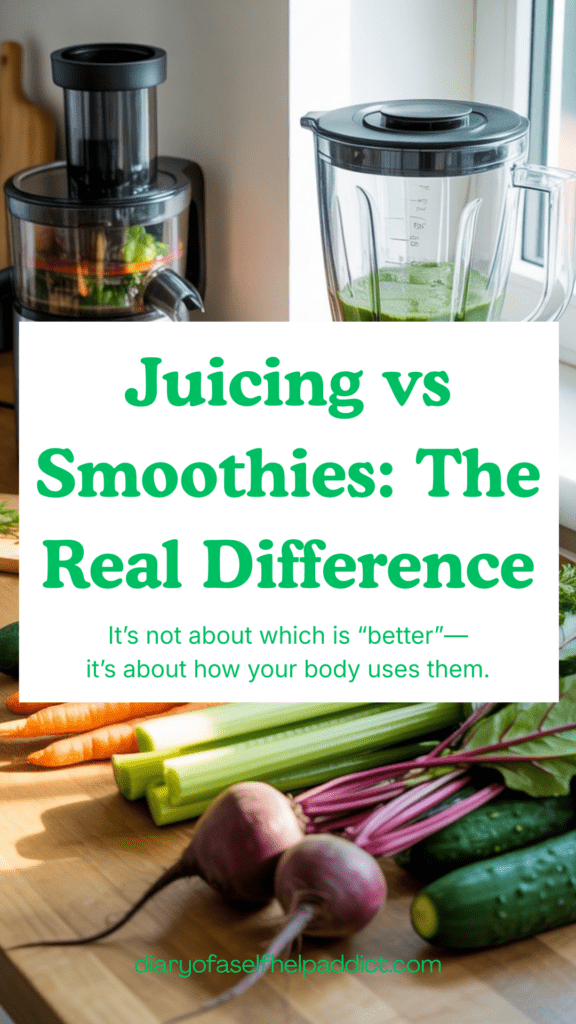
If you’ve spent any time in the wellness space, you’ve likely heard strong opinions on juicing versus smoothies. Some swear by fresh juice for detox and cellular nourishment, while others insist smoothies are superior because they retain fiber. The truth, like most things in health, is nuanced.
In this blog, we’ll break it all down in a grounded, practical way.
Part One explores the real differences between juicing and smoothies, the benefits of each, and whether one is actually “better.”
Part Two builds on that foundation with a practical guide to using specific juices to support different organs, especially for digestion and bloating, which are often where symptoms first appear.
Let’s start with the basics.
Part One: Juicing vs. Smoothies — What’s the Real Difference?
At first glance, juicing and smoothies may look similar. Both involve fruits and vegetables, both are nutrient-dense, and both are popular wellness tools. But what happens to the produce during preparation dramatically changes how your body experiences it.
What Is Juicing?
Juicing removes the fiber from fruits and vegetables, leaving behind a liquid rich in:
- Vitamins
- Minerals
- Enzymes
- Phytonutrients
Because the fiber has been removed, the juice is absorbed rapidly. This means nutrients hit your bloodstream quickly with minimal digestive effort.
Juicing is often used for:
- Digestive rest
- Nutrient repletion
- Therapeutic or organ-support protocols
- People with compromised digestion
What Is a Smoothie?
Smoothies blend whole fruits and vegetables, preserving their fiber. The fiber slows digestion, resulting in a more gradual release of sugars and nutrients.
Smoothies tend to be more filling and are often used as:
- Meal replacements
- Blood sugar–friendly options
- Tools for gut motility and microbiome support
Fiber: The Biggest Distinguishing Factor
Fiber is often framed as either the hero or the villain, depending on who you ask. In reality, it’s context-dependent.
Benefits of Fiber (Smoothies)
- Supports healthy bowel movements
- Feeds beneficial gut bacteria
- Slows glucose absorption
- Promotes satiety
When Less Fiber Can Be Helpful (Juicing)
- During gut inflammation
- With bloating or delayed gastric emptying
- In acute illness or recovery
- When nutrient absorption is compromised
Removing fiber doesn’t make juice “inferior”—it makes it different.
Is One Better Than the Other?
This is where wellness culture often oversimplifies.
Juicing is not better than smoothies. Smoothies are not better than juicing.
They serve different physiological purposes.
Juicing May Be Better If You:
- Struggle with digestion or bloating
- Are recovering from illness
- Want targeted organ or cellular support
- Need rapid nutrient delivery
Smoothies May Be Better If You:
- Want stable blood sugar
- Need a meal replacement
- Are supporting gut motility
- Prefer something more filling
Many people thrive by using both strategically, rather than choosing sides.
A Functional Perspective: Timing Matters
Instead of asking, “Which is better?” a more helpful question is:
“When is each most supportive?”
- Morning: Juice can gently hydrate and deliver micronutrients without overwhelming the digestive system.
- Midday or Post-Workout: Smoothies can stabilize blood sugar and provide sustained energy.
- Healing Phases: Juicing may temporarily take priority.
- Maintenance Phases: Smoothies may be more practical.
Now that we understand the difference, let’s move into the most exciting part… using juice intentionally to support specific organs.
Part Two: The Best Juices for Specific Organs (and Why)
Juicing isn’t just about “getting more vegetables.” Certain produce contains compounds that have an affinity for specific organs, tissues, and systems in the body.
Below is a functional, organ-focused guide.
Lungs: Carrot Juice
Why Carrot Juice Supports the Lungs
Carrot juice has long been associated with respiratory health, and for good reason.
Carrots are rich in:
- Beta-carotene, a precursor to vitamin A
- Antioxidants that combat oxidative stress
- Phytochemicals that support epithelial tissue
Vitamin A is critical for maintaining the integrity of mucosal linings, including those in the lungs and airways. These linings act as a first line of defense against environmental irritants, pathogens, and pollutants.
Who May Benefit Most
- People exposed to pollution or smoke
- Those with seasonal respiratory issues
- Anyone recovering from a respiratory illness
How to Use It
- Fresh carrot juice on its own
- Combined with a small amount of ginger or turmeric for added anti-inflammatory support
Liver: Beet Juice
Why Beets Are a Liver Favorite
Beets are renowned for their liver-supportive properties thanks to compounds like:
- Betalains, which support detox pathways
- Nitrates, which improve blood flow
- Methyl donors, important for detoxification
Beet juice supports bile flow and helps the liver process metabolic waste more efficiently.
Who May Benefit Most
- Those experiencing sluggish digestion
- People supporting detox pathways
- Anyone with fatigue related to liver overload
How to Use It
- Dilute beet juice with cucumber or celery to reduce intensity
- Start small—beets are powerful
Kidneys: Cucumber Juice
Why Cucumbers Support the Kidneys
Cucumbers are composed primarily of structured water and electrolytes, making them ideal for kidney support.
They help:
- Promote hydration
- Support urine flow
- Reduce mineral stagnation
Who May Benefit Most
- Those prone to water retention
- Anyone not drinking enough fluids
- People supporting gentle detox
How to Use It
- Pure cucumber juice
- Combined with parsley or lemon for added mineral balance
Heart & Blood Vessels: Pomegranate Juice
Why Pomegranate Is Heart-Friendly
Pomegranates are rich in:
- Polyphenols
- Antioxidants that protect endothelial tissue
- Compounds that support healthy blood flow
Research consistently links pomegranate consumption with cardiovascular protection.
Who May Benefit Most
- Those focusing on heart health
- People managing oxidative stress
- Anyone looking to support circulation
How to Use It
- Fresh-pressed pomegranate juice
- Diluted with water due to natural sugar content
Brain & Nervous System: Blueberry Juice
Why Blueberries Support the Brain
Blueberries contain anthocyanins that:
- Cross the blood-brain barrier
- Reduce neuroinflammation
- Support cognitive function
Who May Benefit Most
- Those under chronic stress
- Anyone experiencing brain fog
- People focused on longevity and cognition
How to Use It
- Juice alone or blended lightly (low fiber strain)
- Combine with a small amount of lemon
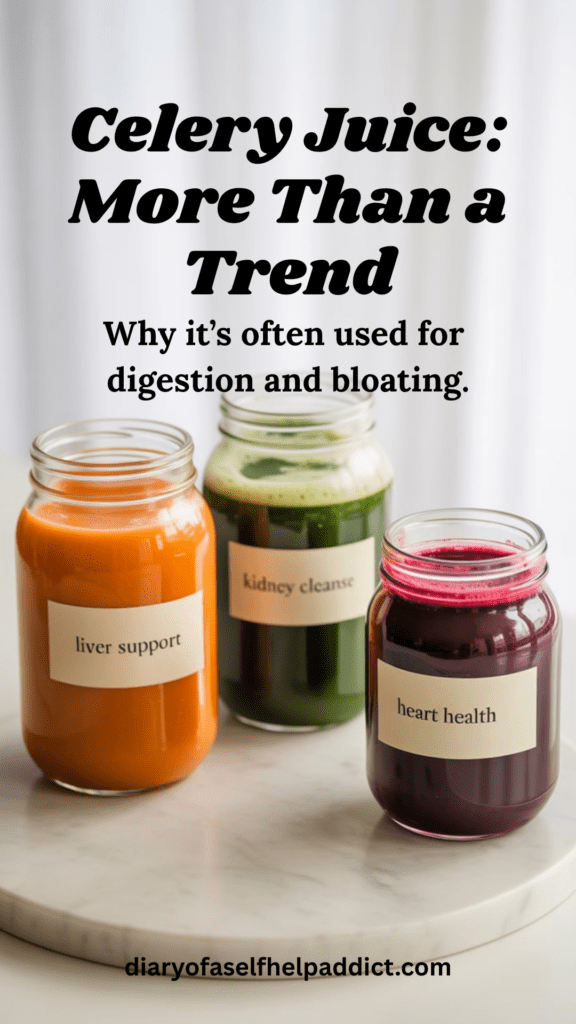
Digestive Tract: Celery Juice
Why Celery Juice Deserves Special Attention
Celery juice has gained enormous popularity and controversy, but its digestive benefits are well documented both anecdotally and mechanistically.
Celery contains:
- Natural sodium clusters
- Phytochemicals that support stomach acid balance
- Compounds that promote gut motility
This delicious juice is often used to:
- Support digestion
- Reduce bloating
- Promote regular elimination
How to Use It
- Fresh, on an empty stomach
- Strained (true juice, not blended)
- Consistently rather than sporadically
A Personal, Discreet Family Experience
I also want to share a personal experience… not as a medical claim, but as an example of how powerful foundational nutrition can be.
As a teenager, my daughter struggled with very painful menstrual cycles. Her doctor prescribed multiple birth control pills over time in an attempt to manage the pain. While the pain did lessen, the side effects were significant and difficult for her, ranging from mood changes and anxiety to acne and weight gain. Ultimately, the trade-offs didn’t feel worth it.
We began looking for a gentler, food-based approach to support her body instead.
That’s when we introduced celery juice.
During her senior year of high school, she drank 4–8 ounces of fresh celery juice every morning on an empty stomach. Over a very short time, something unexpected happened: her periods became completely pain-free.
It was shocking—in the best way.
No medications. No harsh interventions. Just consistency with a simple, mineral-rich juice.
While everyone is different and experiences vary, this was a powerful reminder to our family of how deeply nutrition can influence the body’s systems.
Celery Juice and Immune Support
Beyond digestion and hormonal support, celery juice has also become a go-to in our home during times of stress or when we feel run-down.
We often use it:
- At the first sign of feeling “off.”
- During high-stress or low-sleep periods
- As gentle support when viruses are circulating
Its hydrating, mineral-rich profile makes it a simple addition during times when the body may need extra support.
How to Use Celery Juice
- Fresh, on an empty stomach
- 4–8 ounces to start
- Strained (true juice, not blended)
- Used consistently rather than sporadically
Celery juice isn’t a cure-all, but in the right context, it can be a surprisingly supportive tool.
Skin: Green Juice (Cucumber, Celery, Spinach)
Why Greens Support the Skin
Skin health is often a reflection of:
- Liver function
- Hydration status
- Inflammation levels
Green juices provide:
- Chlorophyll
- Minerals
- Antioxidants
Who May Benefit Most
- Those with acne or eczema tendencies
- People exposed to environmental toxins
- Anyone focusing on anti-aging
A Note on Sugar, Balance, and Bioindividuality
While juice is powerful, it’s not a free-for-all.
A few grounding principles:
- Prioritize vegetable-based juices
- Rotate ingredients
- Listen to your body
- Use juice as support, not a replacement for real food
Some people thrive on daily juice. Others do better with intermittent use. Both are valid.
Bringing It All Together
Juicing and smoothies are not opposing camps—they’re complementary tools.
- Smoothies nourish the gut and stabilize blood sugar.
- Juices deliver targeted, easily absorbed nutrients.
When used intentionally, both can support:
- Organ health
- Energy
- Digestion
- Long-term wellness
Instead of asking which trend is right, the better question is:
What does my body need right now?
That answer may change with seasons, stress levels, illness, or life phases—and that’s exactly how it should be.
If you enjoyed this post, be sure to comment below and stay tuned for more functional, root-cause wellness content.
Shop My Favs!
Sunwarrior Protein Powder (Vanilla)
As an Amazon Associate, I may earn a very small commission from qualifying purchases made through my links. Thank you for supporting my small business! Read my privacy policy and disclosure here.
Pin it for later
Wow, what timing. I am looking at juicers because I want to add some juices for medicinal purposes to my diet and have been wondering if it is ok to use juices rather than smoothies. I have a hard time drinking vegetable smoothies and much prefer just eating a salad, but want more nutrition right now than a salad can provide. This article is so helpful for understanding the difference and I love your recipes too. Thank you!