January might feel way too early to be thinking about tomatoes, basil, and summer harvests, especially here in Georgia. But after years of gardening (and a few seasons of doing way too much), I’ve learned something important:
January is when a calm, productive summer garden is actually made.
In the past, I’ve started seeds indoors, fussed over grow lights, timed everything down to the week, and honestly… made it more complicated than it needed to be.
This year, life is full in the best and busiest ways. So I’m choosing a simpler approach: I’ll be buying plant starts instead of starting all my seedlings myself. And yes, that still counts as real gardening.
Whether you love starting seeds or plan to grab healthy transplants later, January is still the month to slow down, get clear, and set yourself up for success.
This post is written specifically for Georgia gardeners (Zones 7b–8b) and walks you through exactly what I do—step by step—without the overwhelm.
Step 1: Know Your Zone & Frost Dates
Most of Georgia falls into USDA Zones 7b–8b, which means our growing season is generous, but timing still matters.
- Average last frost: March 20–April 10 (depending on location)
- Warm-weather crops need warm soil, not just warm air
Why this matters: Everything—seed starting, buying starts, planting outdoors—works best when you plan backward from your last frost date.
👉 Real-life tip: Write your estimated last frost date on your calendar now. It becomes your anchor for the entire season.
Step 2: Decide How You’ll Garden This Year
Before you buy seeds, trays, or anything else, decide how much time and energy you realistically have.
There’s no gold star for doing it the hardest way.
Option A: Buying Plant Starts (My Choice This Year)
Perfect if your plate is already full.
- Purchase strong, local starts adapted to Georgia heat
- Skip grow lights and daily seedling care
- Still enjoy a thriving, productive garden
Option B: Starting Seeds Yourself
A great option if you enjoy the process.
- More variety
- Requires consistency, light, space, and attention
✨ Both paths are valid. Your garden should support your life—not compete with it.
Step 3: Prep Your Garden Space
No matter how you plant, this step is non-negotiable—and it makes everything easier later.
What I do in January–February (weather permitting):
- Clear old plants and weeds
- Test or refresh soil (Georgia soil loves organic matter)
- Add 2–3 inches of compost
- Observe sunlight (aim for 6–8 hours)
- Plan irrigation now—not in July
👉 Pro tip: Take photos of your beds now. It’s helpful for planning—and motivating later.
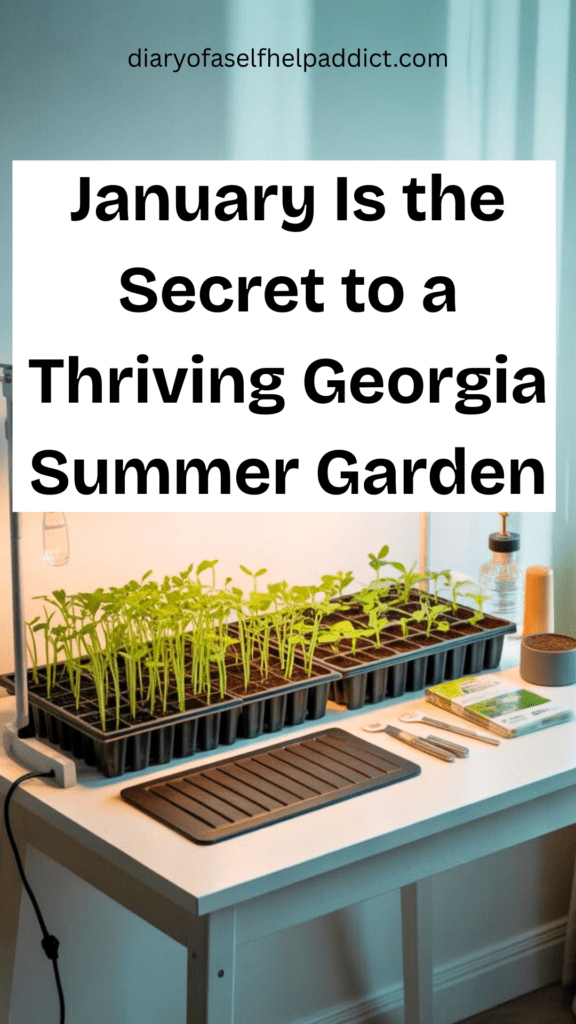
Step 4: Start Seeds Indoors (Only If You Want To)
If you are starting seeds, keep it simple.
Best crops to start indoors (late January–February):
- Tomatoes
- Peppers
- Eggplant
Basic supplies (linked below):
- Seed trays or small pots
- Seed-starting mix (not garden soil)
- Grow light or very bright window
- Labels (you’ll thank yourself)
👉 Start seeds 6–8 weeks before your last frost.
If you’re buying starts later, you can skip this entire step—guilt-free.
Step 5: Know What Should Be Direct-Sown
Some plants simply don’t like being transplanted.
Direct-sow outdoors once soil is warm (late April–May):
- Corn
- Beans
- Squash
- Cucumbers
- Melons
- Okra
Waiting for warm soil is key in Georgia.
My Easy Georgia Garden Calendar
January
- Decide: seeds or starts
- Clean beds
- Order seeds (if needed)
- Test and amend the soil
February
- Start seeds indoors (optional)
- Continue bed prep
- Plan garden layout
March
- Watch the weather closely
- Harden off seedlings
- Plant cool-season crops if desired
Late March–Early April
- Transplant tomatoes after frost risk
- Install cages and trellises
April–May
- Direct-sow warm-weather crops
- Buy and plant nursery starts
- Mulch generously
May–June
- Water deeply
- Feed consistently
- Watch for pests early
Busy Gardener Tips (Georgia Edition)
- Local nurseries carry varieties that thrive here
- Mulch early—it saves time and water
- Don’t overplant (Georgia heat is no joke)
- Shade cloth can be a summer lifesaver
A small, well-loved garden always wins.
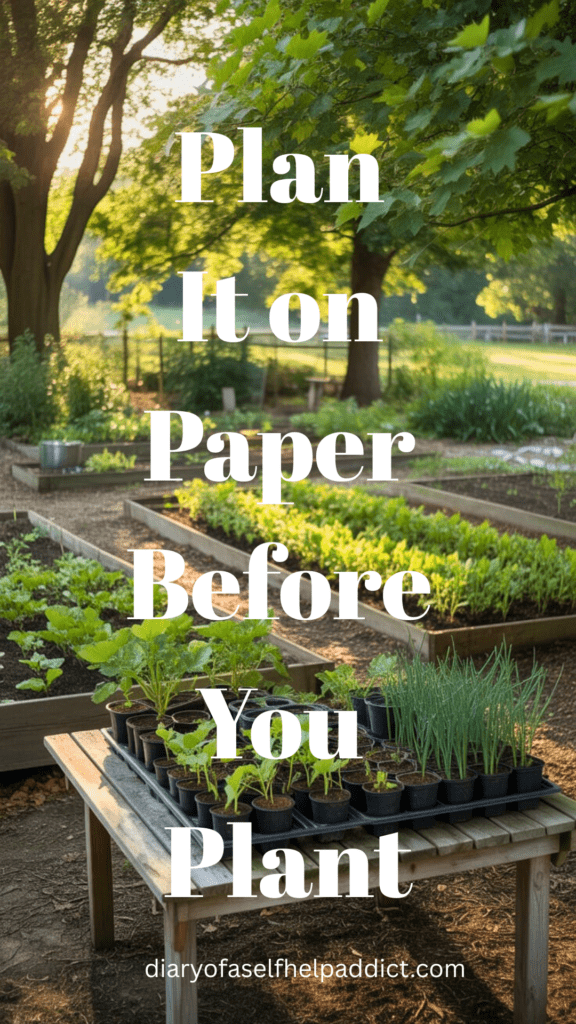
How I Plan the Actual Garden Beds
This is the step that changes everything.
Before I plant anything, I plan my beds on paper. It saves space, prevents disease, and keeps the garden feeling calm instead of chaotic.
1. List What Your Family Actually Eats
Start in the kitchen.
I write down what we eat every week:
- Tomatoes
- Cucumbers
- Peppers
- Zucchini
- Green beans
- Greens
- Everyday herbs
If no one eats it, it doesn’t get precious garden space.
2. Decide Seeds vs. Starts
Next to each crop, I note:
- Seed indoors
- Buy starts
- Direct sow
This keeps my expectations realistic.
3. Match Plants to the Right Beds
Full sun beds:
- Tomatoes, peppers, eggplant, okra
Moderate sun / edges:
- Cucumbers, squash, beans
Partial shade:
- Greens, parsley, cilantro
Tall plants go on the north or back side so they don’t shade others.

4. Plan Companion Planting
Good pairings:
- Tomatoes + basil or marigolds
- Cucumbers + dill
- Squash + nasturtiums
- Beans + corn
This helps with pests, pollination, and space.
5. Sketch Each Bed
Nothing fancy—just boxes, spacing, and labels. This becomes my planting-day guide.
6. Create One Master Chart
Mine includes:
- Crop
- Seed or start
- Bed location
- Planting time
I reference it all season long.
Kelly’s Thoughts
January gardening isn’t about doing everything. It’s about doing the right things at the right time.
This year, I’m choosing simplicity—buying plant starts, planning with intention, and still enjoying the magic of a Georgia summer garden.
Whether you’re starting seeds or planning to shop local this year, I hope this guide gives you some encouragement and inspiration to start preparing for your summer garden now.
🌱 Here’s to a grounded, joyful growing season ahead.
Shop This Post
🌱 Essential Seed-Starting Supplies (with Amazon-friendly links)
Complete Setups (Great for Beginners)
- VIVOSUN Seed Starter Kit with LED Grow Lights – Includes lights and tray cells — a good all-in-one starter option (especially if your indoor light is weak).
Heat Mats (Speed Germination & Boost Growth)
Warm soil usually improves germination for heat-loving crops like tomatoes, peppers, and eggplants.
- Epic Gardening Seed Starting Heat Mat – Well-reviewed, fits standard trays.
- BN‑Link Durable Seedling Heat Mats – Budget-friendly but effective for lots of seed trays.
Humidity & Germination Helpers
- Hydrofarm CK64050 Germination Station – Great single station to keep seeds moist and warm early on.
Trays & Containers (Where Your Seeds Actually Grow)
- 200‑Cell Seed Starting Plug Trays – Lots of cells, so you can start a wide variety.
- 72‑Cell Seed Starting Plug Trays – Good medium size that’s easy to manage.
- 720‑Cell Seedling Starter Trays – Excellent for herbs and small seeds — lots of starts per kit.
🧰 Other Helpful Supplies
- Seed-starting mix/potting mix — Lightweight, sterile media is far better for seeds than garden soil. Read about starting seeds indoors on the Home Depot website.
- Humid dome covers (Individual & Container)— Help maintain moisture while seeds sprout.
- Spray bottle or mister — Gentle watering keeps soil moist without washing seeds away.
- Timers for lights — Aim for 12–16 hours of light/day on seedlings.
- Labels/markers — Critical for tracking varieties and planting dates.
As an Amazon Associate, I may earn a small commission on purchases from these links at no extra cost to you. Thank you for supporting my small business! Read my privacy policy and disclosure here.
Pin it for later
Love this! We’ve already started planting in Florida! Great guide.
Using this guide to plan my Georgia summer garden this year!