
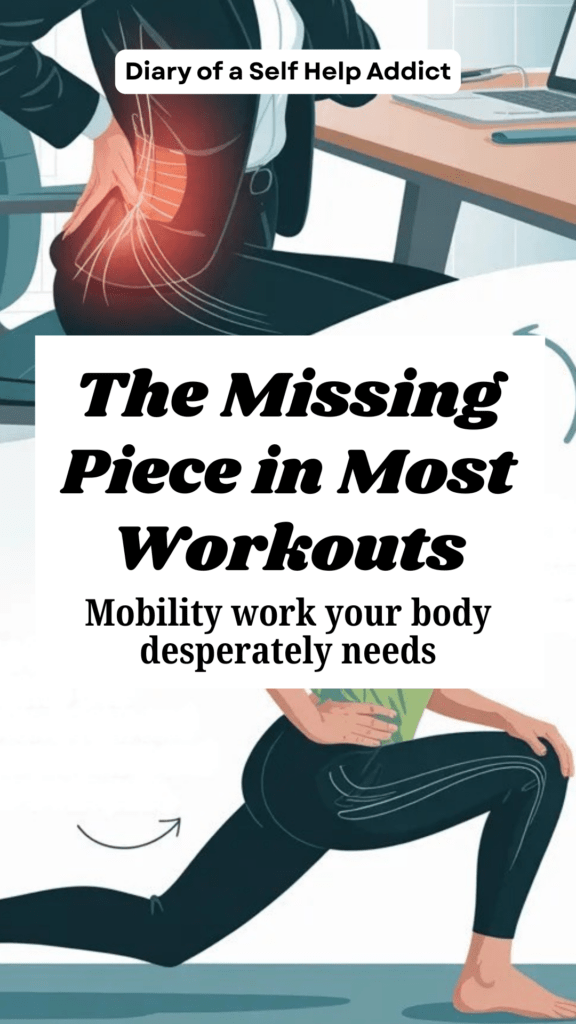
If you’ve spent any time on fitness TikTok or deep in the wellness corners of social media lately, you’ve probably heard people say things like:
“Stretching is overrated.” “You can’t actually lengthen a muscle.” “Stretching doesn’t prevent injury.”
And technically? Some of that may be true from a purely anatomical standpoint. Muscles do attach from an origin to an insertion, and no, we’re probably not permanently “making muscles longer” in the way some people might think. But after more than 26 years as a Pilates instructor, I can confidently say this:
Stretching still matters. A lot.
I see it every single day in my own body and in my clients’ bodies. I see what happens when muscles become chronically tight, overworked, shortened, guarded, or imbalanced. Also, I see what happens when people consistently incorporate mindful stretching into their routines: they move better, feel better, breathe better, sleep better, and often hurt less.
So whether science wants to debate the exact mechanics of stretching or not, the real-life results are hard to ignore. And honestly? Your body doesn’t care what fitness trends are popular online… It cares about movement. Your joints care about balance. And your nervous system craves mobility.
Let’s talk about why stretching still deserves a place in your wellness routine.
What Stretching Actually Does
Stretching is less about “making muscles longer forever” and more about improving mobility, flexibility, circulation, nervous system regulation, and movement quality.
When muscles become excessively tight, they create tension on the joints and bones they attach to. Over time, this can create compensation patterns throughout the body.
Think of your body like a marionette puppet. If one string gets pulled too tight, it changes the position and movement of everything connected to it. That’s exactly what happens with tight muscles.
A tight hip flexor can pull on the pelvis. Tight hamstrings can affect the lower back. When chest muscles are tight, the shoulders can become forward-rounded, straining the neck. Tight calves can even influence the knees and feet.
The body is one giant interconnected system. Nothing works in isolation.
Related Video: 25 Minute Stretch Workout (Strong Tower Pilates YouTube)
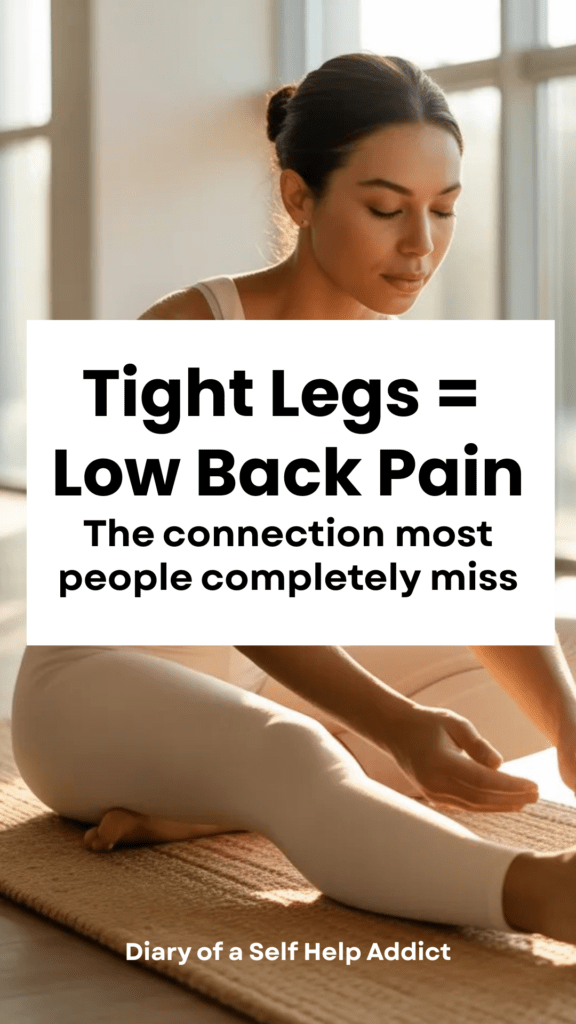
Why Tight Leg Muscles Often Lead to Low Back Pain
This is one of the biggest things I see in clients. People often think their lower back is the problem… when really the lower back is the victim.
The leg muscles are large and powerful. When they become excessively tight, they pull on the pelvis and surrounding structures. The low back muscles, which are much smaller and more delicate, often end up overworking to compensate.
The result? Tension. Compression. Spasms. Pain. Especially in people who:
- Sit all day
- Drive frequently
- Lift weights without flexibility work.
- Walk in unsupportive shoes.
- Have poor posture
- Rarely stretch after workouts.
The hips, glutes, hamstrings, quads, and hip flexors all directly influence pelvic positioning and spinal mechanics.
This is why I constantly encourage clients to stretch their lower bodies. Not because flexibility is some party trick. But because healthy movement patterns matter.
Stretching and the Nervous System
One thing people don’t talk about enough is how stretching affects the nervous system. Many of us live in a chronic state of stress. We sit at computers. Scroll our phones. Clench our jaws. Rush through life. Our nervous systems become stuck in “fight or flight” mode.
Gentle stretching can help shift the body into a more parasympathetic state, also known as “rest and digest.” That’s one reason stretching often feels so calming. It’s not just physical. It’s neurological.
Slow breathing combined with stretching can:
- Reduce muscle guarding
- Improve body awareness
- Lower stress hormones
- Promote relaxation
- Improve sleep quality
- Help release stored tension.
- Decrease pain
This is especially important as we age. Stress alone can make the body feel tight and rigid.
Flexibility vs Mobility: What’s the Difference?
People often use these interchangeably, but they’re actually different.
Flexibility
Flexibility refers to the ability of a muscle to lengthen.
Mobility
Mobility refers to how well a joint moves through its range of motion with control. You can technically be flexible but not mobile. And you can improve mobility without becoming a human pretzel. For most people, the goal shouldn’t be extreme flexibility. The goal should be:
- Moving well
- Feeling good
- Reducing pain
- Improving posture
- Maintaining independence
- Supporting healthy aging
That’s where stretching and mobility work shine.
Related Video: MyoFascial Release For the Hips & Low Back (Strong Tower Pilates YouTube Channel)
When Should You Stretch?
This depends on the type of stretching you’re doing.
Before a Workout
Before exercise, I prefer dynamic stretching or mobility work. This means controlled movement rather than long passive holds.
Examples include:
- Leg swings
- Arm circles
- Cat-cow
- Hip circles
- Spinal rotations
- Walking lunges
Dynamic movement helps warm the tissues and prepare the body for activity.
After a Workout
This is a great time for more traditional static stretching.
Post-workout stretching may help:
- Reduce tension
- Improve recovery
- Calm the nervous system.
- Restore movement patterns
This is especially important after:
- Weight training
- Running
- Cycling
- HIIT workouts
- Long periods of sitting
Before Bed
One of my favorite times to stretch. Gentle evening stretching can help release accumulated tension from the day and signal the body to relax. A few minutes of stretching before bed can honestly feel magical.
How Long Should You Hold a Stretch?
You don’t need to spend an hour stretching. Consistency matters more than duration. In general:
- 30–60 seconds is sufficient for most static stretches. Many PTs say not to hold for more than 2 minutes.
- Repeat 2–4 times if needed.
- Focus on breathing slowly.
- Never force the stretch.
Stretching should feel like tension… not pain. If you’re grimacing, bouncing aggressively, or holding your breath, you’re probably pushing too hard. Your nervous system will often resist aggressive stretching. Gentler tends to work better long-term.
The Most Important Areas to Stretch
In my experience, these areas tend to become the tightest in modern life:
Hip Flexors
Especially from sitting. Tight hip flexors can contribute to:
- Anterior pelvic tilt
- Low back tension
- Hip discomfort
Hamstrings
Tight hamstrings can affect the mechanics of the knees, pelvis, and lower back.
Glutes and Piriformis
These muscles often become tight from prolonged sitting and inactivity.
Chest Muscles
Modern posture = forward-rounded shoulders and a forward head. Stretching the chest (pectoral muscles) can help improve posture and reduce neck strain.
Calves
Often overlooked, but incredibly important for walking mechanics and ankle mobility.
Thoracic Spine
Upper back mobility matters more than people realize. When the thoracic spine becomes stiff, the neck and low back often compensate.
Can Stretching Prevent Injury?
This is another controversial topic online. The research is mixed depending on the type of stretching and activity. But here’s my personal and professional perspective: Bodies that move well generally function better.
When joints lose mobility and muscles become chronically tight, compensation patterns increase. Compensation often leads to overload somewhere else. And overload can eventually become pain or injury.
Stretching alone isn’t some magical injury-proofing tool. But as part of a balanced movement routine? I absolutely believe it helps support healthier mechanics.
Why Pilates and Stretching Work So Well Together
This is one reason I’ve loved Pilates for over two decades. Pilates isn’t just about “working out.” It’s about balanced movement.
- Strength AND mobility.
- Control AND flexibility.
- Stability AND flow.
Good Pilates teaches the body how to move efficiently while also addressing tightness, posture, alignment, breathing, and muscular imbalances. That combination is incredibly powerful.
Many people don’t actually need more intense workouts. They need better movement quality.
Related Video: Strong Tower Pilates Studio’s Restorative Playlist— Check this out for lots of stretching videos.
The Problem With Modern Life
Humans weren’t designed to sit for 8–10 hours a day.
Yet many people are sitting while they work, drive, eat, scroll, and watch TV. Over time, the body adapts to whatever positions we spend the most time in. That means:
- Tight hips
- Rounded shoulders
- Weak glutes
- Forward head posture
- Reduced spinal mobility
- Stiff ankles
Stretching helps counteract some of those patterns. Not perfectly. But significantly.
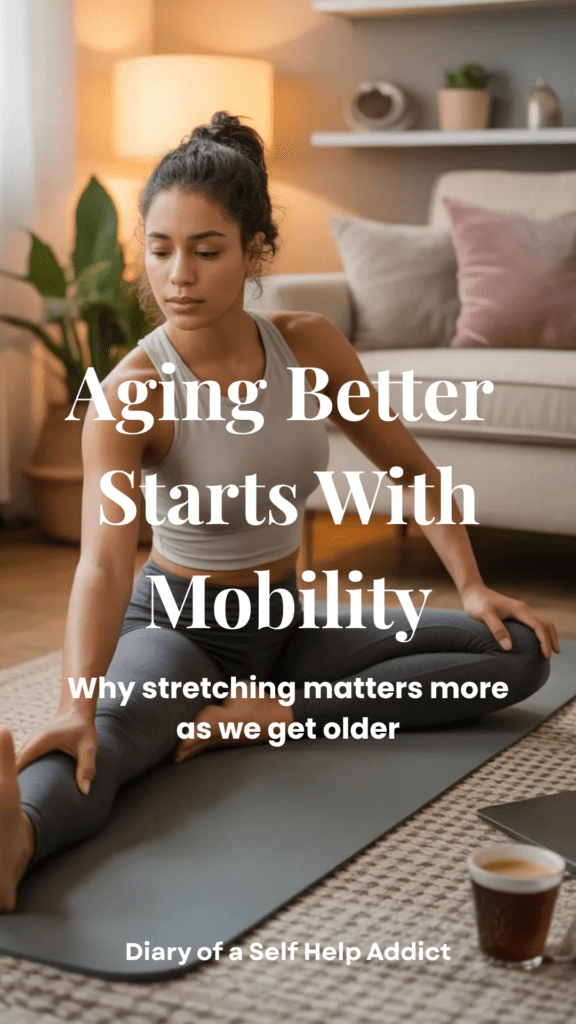
Stretching As We Age
This becomes even more important with age.
As we get older, many people naturally experience:
- Reduced mobility
- Joint stiffness
- Muscle tightness
- Decreased circulation
- Loss of balance
- Reduced movement confidence
Regular stretching and mobility work can help support:
- Better posture
- Easier daily movement
- Improved balance
- Reduced stiffness
- Better body awareness
- More comfortable aging
And honestly, quality of life matters. Being able to move comfortably matters. Getting up from the floor matters. Reaching overhead matters. Walking without pain matters. Turning the head to check your blind spot while driving matters.
Flexibility isn’t just athletic. It’s functional.
My Personal Thoughts After 26 Years Teaching Pilates
After teaching bodies for this long, I’ve learned something important: The body whispers before it screams.
- Tightness is often a whisper.
- Stiffness is often a whisper.
- Restricted movement is often a whisper.
Pain tends to come later. Stretching helps you stay connected to your body before things escalate. It encourages awareness. And awareness is one of the most powerful tools we have in health and wellness.
I’m not saying stretching is the cure for everything. It’s not. But I do think we’ve swung too far into the “flexibility doesn’t matter” narrative online.
Because when I see clients who stretch consistently versus those who never do… The difference is noticeable. Not just physically. But emotionally too. People move with more confidence when their bodies feel less restricted.
Simple Ways to Add More Stretching Into Your Life
You don’t need an elaborate routine. Start small. Here are easy ways to incorporate stretching:
- Stretch for 5–10 minutes before bed.
- Do hip openers after sitting.
- Stretch after workouts.
- Take movement breaks during work.
- Add mobility work before exercise.
- Try Pilates or yoga
- Focus on breathing while stretching.
- Stretch while watching TV.
Consistency beats perfection every time.
Kelly’s Thoughts
Maybe stretching doesn’t literally “lengthen” muscles forever. Maybe science is more nuanced than we once believed. But that doesn’t mean stretching is useless. Far from it.
Because movement quality matters. Joint health matters. Posture matters. Nervous system regulation matters. Pain reduction matters. And feeling good in your body matters.
After 26 years of teaching Pilates, I still wholeheartedly believe stretching plays an important role in overall wellness. Not because of fitness trends. But because I see the results with real people every single day.
Your body was designed to move. Don’t let modern life make it forget how.
Pin it for later
This post is for informational purposes only and not medical advice. Read the Disclaimer and Privacy Policy here.
Leave a Reply