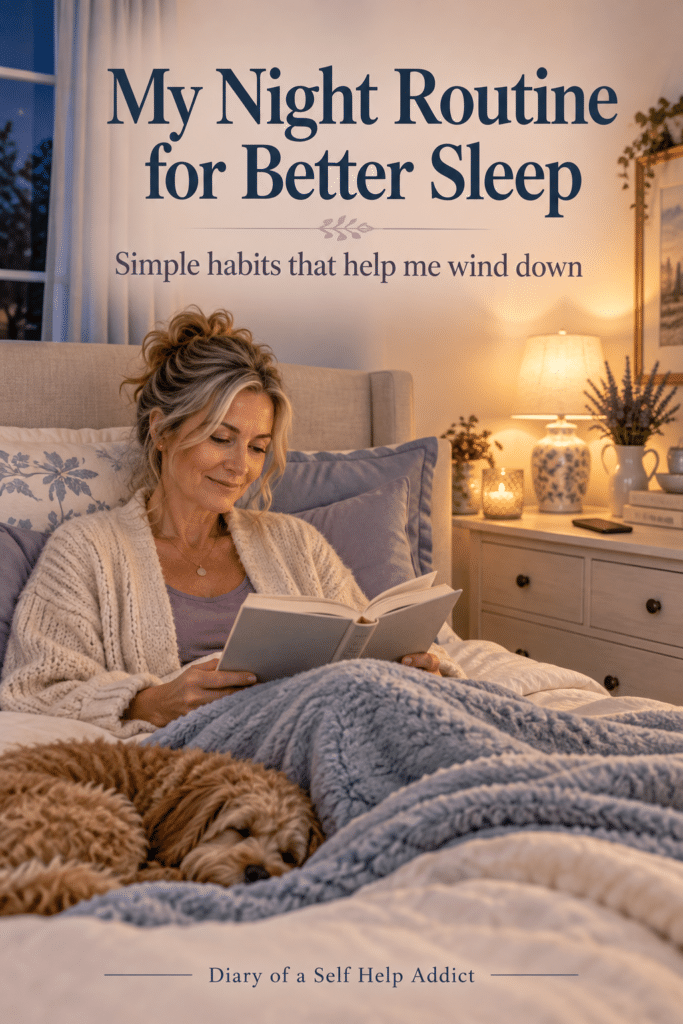
For a long time, I thought sleeping well mostly depended on what time I went to bed. I’d crawl under the covers, hope for the best, and then wonder why I felt tired the next day. I’ve learned that the hours before bed matter, too. A few small choices can help my body and brain wind down before my head even hits the pillow.
I’m not saying I follow every step perfectly every single night. Life happens. But when I stick to the habits that work for me, I notice a real difference. Lately, I’ve also been eating well, mostly whole-food, plant-based meals, and that seems to have helped my sleep more than I expected. I’m sharing what I do in case it gives you a few ideas to try.
Sleep is one of those things we take for granted until we don’t get enough. If you want to read more about why I care so much about quality sleep, I wrote about it here: Why Quality Sleep Is the Secret Ingredient to Better Health.
Amazon Associate Disclosure: As an Amazon Associate, I earn from qualifying purchases. This post may contain affiliate links, which means I may earn a small commission if you make a purchase through one of my links, at no extra cost to you.
I Try to Finish Eating at Least Two Hours Before Bed
I do my best not to eat in the two hours before bed. This isn’t a strict rule for everyone, and it doesn’t mean you should ignore real hunger. It’s simply a timing habit that works well for me. When I eat a big meal right before bed, I don’t feel as comfortable settling in, so I give myself a little space between dinner and bedtime.
That little pause also helps my evening feel less like a sprint from dinner to bed. I can clean up, take a bath, read for a bit, and let the day slow down. If I’m genuinely hungry, I’ll listen to my body; I try not to make late-night eating part of my routine.
I Put My Phone Away at Least an Hour Before Bed
This is one of the biggest changes in my routine. I try to stop using my phone at least an hour before bed. I know how easy it is to pick it up “for a minute” and suddenly read a dozen posts, check tomorrow’s weather, answer a message, and watch a video you didn’t even mean to watch.
Phones are stimulating in more than one way. There’s the light from the screen, of course, but there’s also the content itself. A stressful email, a news story, or a conversation that needs a reply can wake up your brain when you want it to settle. Putting the phone away gives me a much clearer boundary between daytime and bedtime.
I also try to keep the room dim in the evening. Light, especially bright light close to bedtime, can send your brain a “stay alert” kind of signal. Blue wavelengths especially affect the body clock and melatonin timing, so a bright phone or tablet right in front of your face at night may make it harder to feel sleepy. Dimming the lights and taking a screen break is an easy place to start.
We have these salt lamp light bulbs in our nightstand lamps that keep our room visibly lit, but soft, not stimulating.
I also love my Viva Ray blue-light-blocking glasses, especially when I’m around screens in the evening. They’re one tool I use, but I still think reducing screen time and brightness is helpful.
I wrote more about the effects of artificial blue light and the glasses I like here: Artificial Blue Light: Its Impact on Your Health & How to Protect Yourself.
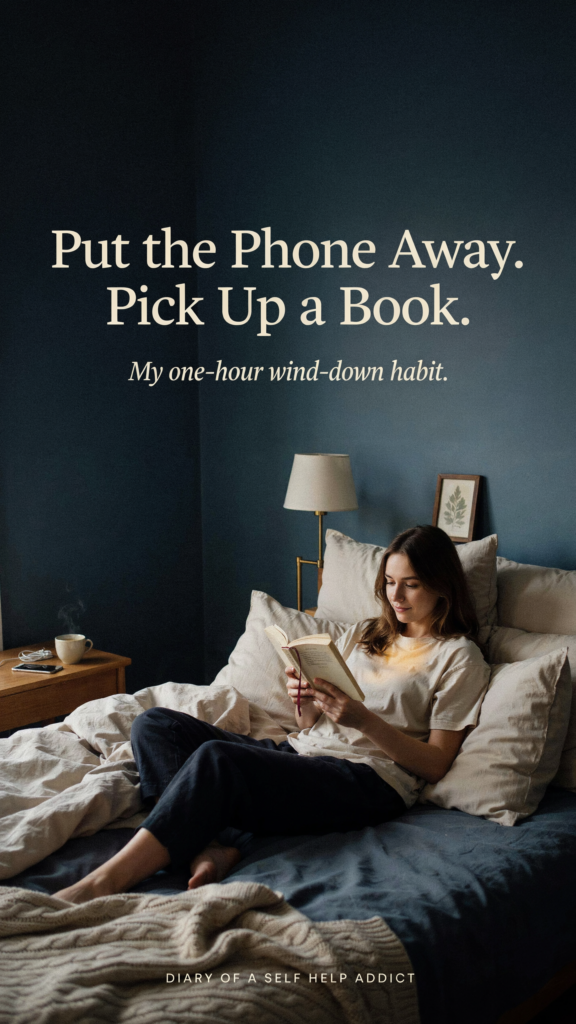
I Read a Paper Book in Bed
Once I put my phone away, I like to read a physical book in bed. No tablet, no e-reader glowing in my face… a real book and a soft light. It gives me something relaxing to focus on, and it feels like a gentle way to close out the day.
Reading also keeps me from reaching for my phone again. I can read a few pages or a whole chapter, depending on how sleepy I am. Sometimes I don’t get very far before my eyes start closing, which is exactly the point. Choose something you enjoy, and that doesn’t wind you up. If a thriller has you saying “just one more chapter” until midnight, save it for earlier in the day!
I especially love historical fiction. These are my recent favs!
- Broken Country by Clare Leslie Hall. It takes place in 1950s England.
- The Frozen River by Ariel Lawhon. Takes place in 1789 in Maine.
- The Girls in the Stilt House by Kelly Mustian. Set in the 1920s in Mississippi.
- The River Is Waiting by Wally Lamb. Contemporary fiction set in present-day Connecticut.
I Make My Bedroom Dark, Quiet, and Calm
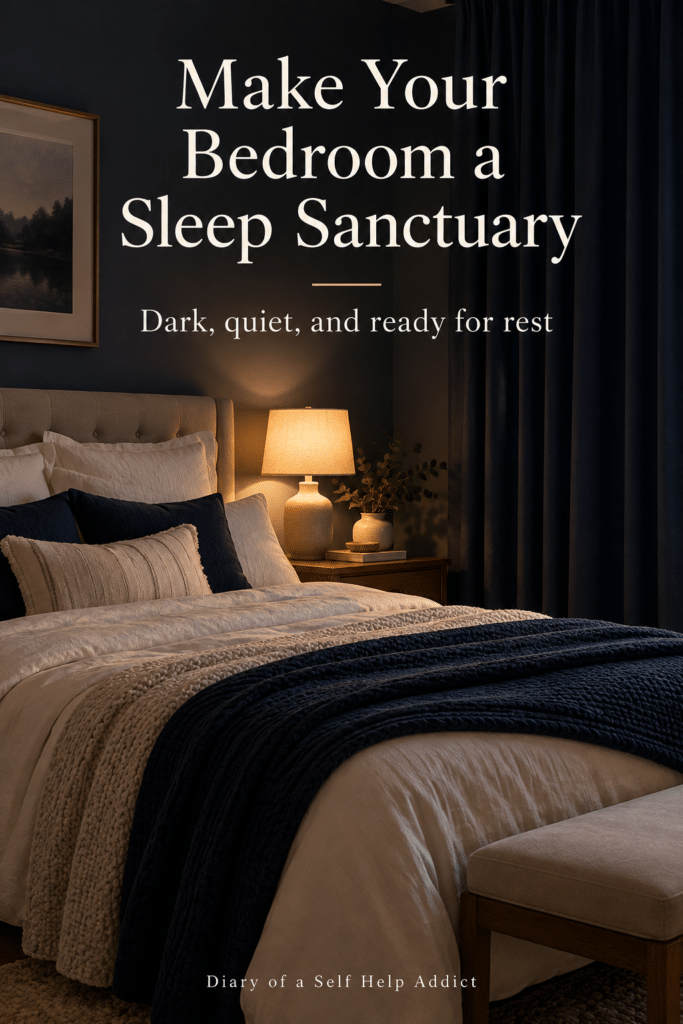
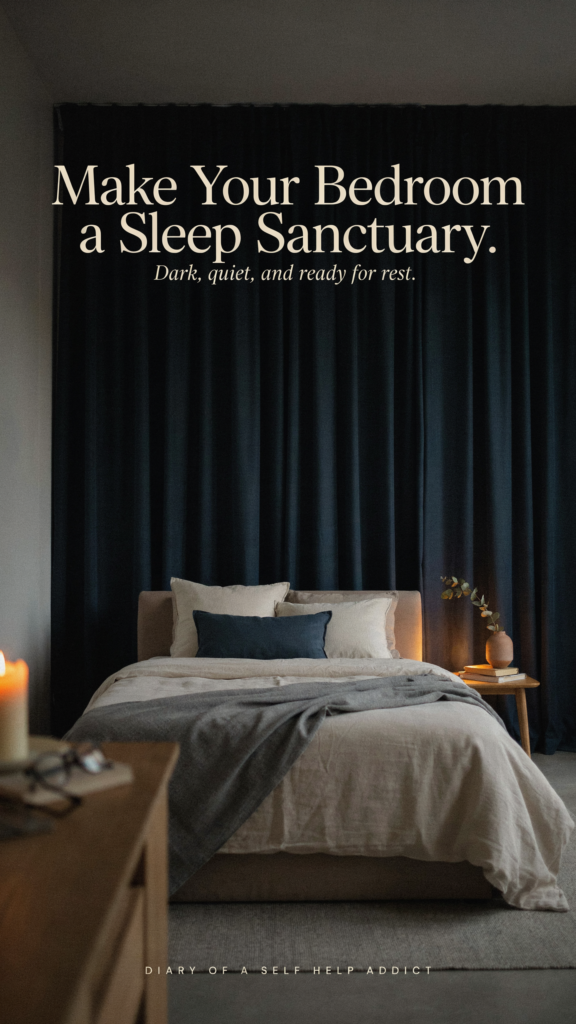
I want my bedroom to feel like a little sanctuary. For me, that means cool, quiet, and as dark as I can comfortably make it. I don’t want a bright clock, a phone screen lighting up across the room, or a blinking charger light pulling my attention. I cover or turn off little lights where I can, and I keep the room as peaceful as possible.
Darkness matters because light helps set our internal day-and-night rhythm. Even a small amount of light can distract some people, and bright light at night can interfere with the signals that help the body prepare for sleep. If you need an alarm, you might try turning the display away from the bed or using a clock with a dim setting. Blackout curtains, an eye mask, or earplugs can help if you can’t control light or noise.
A quiet room doesn’t have to be absolutely silent. If a fan or steady background sound helps you relax, that can be part of your sanctuary, too. The goal is to make the room feel restful and predictable, not to create a perfect sleep laboratory.
Here’s the alarm clock I use (so I don’t have to keep my phone near my bed). It’s like the Hatch brand clock, but less expensive. I like that I can dim the display to non-visible and that it wakes me up slowly by adding a glow to the room beginning 10 minutes before my alarm goes off. Plus, there are lots of alarm sounds to choose from that will wake you without shocking you from a deep sleep.
Once again, the Salt light bulbs we love. Plus a link to the VivaRay blue-light-blocking glasses I love. (See article listed above.)
If My Phone Needs to Be Nearby, I Use Airplane Mode
Sometimes you need your phone near you. If so, consider switching on airplane mode overnight, especially if you don’t need calls or messages to come through. You can also silence notifications, use Do Not Disturb, and place the phone away from the bed or screen-side down.
I like airplane mode because it limits the phone’s wireless connections and helps me feel less tempted to check it. Although more research is needed, some people worry that radiofrequency fields from mobile phones can alter brain wave patterns and reduce sleep quality. Putting the phone on airplane mode may help reduce the risk.
I Take a Warm Bath Before Bed
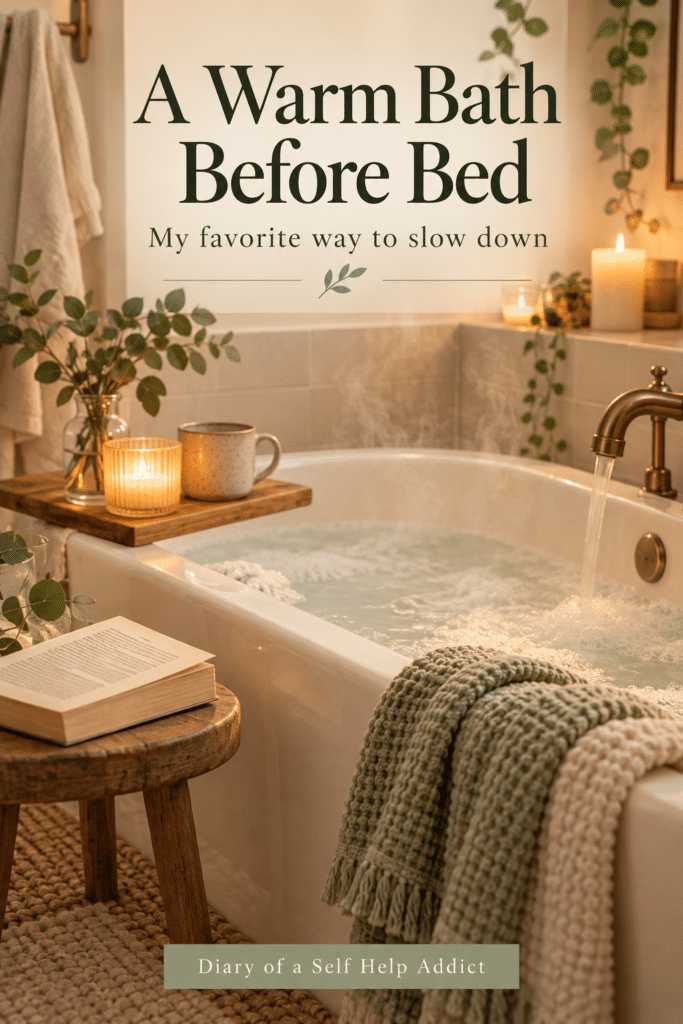
A bath is probably my favorite part of winding down. I almost always take one before bed, whether or not I’ve used the sauna. It’s warm, quiet, and gives me a little time to do nothing. Sometimes I add Epsom salt, baking soda, bentonite clay, and occasionally Borax (yep, the laundry booster). Do your research to find what works best and is safe for you. I call it my “detox bath”. A warm bath can feel relaxing, and some research suggests that bathing before bed may help people fall asleep more easily.
Recently, I’ve added about 15 minutes in the steam sauna (a Christmas gift from my hubby several years ago), usually 1 to 2 hours before bed, followed by my bath. I’m still figuring out what timing feels best for me. Heat can be relaxing, but a hot sauna isn’t for everyone, and it’s important to avoid overheating or dehydration. I keep sessions short, listen to my body, and drink fluids earlier in the day. The sauna is a soothing part of my routine, not a required step or a guaranteed sleep fix.
Related Read: SAUNA THERAPY & ELIMINATION PATHWAYS: WHY SWEATING IS ONE OF THE MOST UNDERRATED WELLNESS TOOLS
I’ve Stopped Drinking Alcohol, and My Sleep Feels Better
I haven’t had a drink since March 2026, and honestly, it’s been glorious for my sleep and my skin. I wasn’t planning to stop forever. We rarely drank, and I thought I might have a drink once in a while after taking a break. But after going without it for a while, I noticed how much better I felt and decided not to start up again for now.
I don’t know exactly why alcohol seemed to affect me the way it did. I’ve joked that since I don’t sweat much, maybe my lymphatic system doesn’t know what to do with it. What I can say is that I feel better without it.
Alcohol can make someone feel sleepy at first, but it can also lead to more disrupted sleep later in the night. That may be part of why some people wake up earlier or feel less refreshed after drinking. Everyone’s experience is personal. For me, taking alcohol out of the picture has been a surprisingly positive change, and I’m happy with that choice.
Taking Sleep Supplements
If you take a sleep supplement as part of your evening routine, I’d take it about 30 to 60 minutes before bed, or follow your clinician’s or the product label’s directions. I personally prefer magnesium glycinate and have taken up to 1,000 mg nightly.
Honestly, lately I’ve been sleeping well even on nights when I skip supplements. Eating well, mostly whole-food, plant-based meals, plus a consistent nighttime routine, seems to have helped more than I expected. I think supplements may be one piece of the puzzle for some people, especially while they’re building their habits, but they aren’t a substitute for looking at the whole routine. And you definitely don’t need to take a whole collection of sleep supplements all at once.
If you feel the need to use sleep supplements while you’re building your nighttime routine, here are a few we’ve tried and found helpful. As always, do your research and check with your healthcare provider to determine what’s best for you.
Magnesium Glycinate (there are many good brands; find one that works for you)
Magnesium Spray: I love spraying magnesium chloride on the soles of my feet and lower legs when I get in bed; it really helps my sleep. Topical magnesium can really benefit sleep and can be applied even if you take an oral magnesium supplement.
If you can tolerate Melatonin ( I can’t; it gives me nightmares), my husband loves this supplement for sleep. Natrol Ultra Sleep
I Cut Off Caffeine After Noon
I try to avoid caffeine after 12 p.m. Caffeine can stay in your system for hours, and some people are more sensitive to it than others. If you’re having trouble falling or staying asleep, it may be worth moving your last coffee, tea, or caffeinated soda earlier to see whether you notice a difference.
I also aim to drink around 80 to 100 ounces of water a day, mostly earlier in the day. That’s what works for me, not a magic number everyone needs to hit. Drinking most of my water before noon helps me avoid chugging a lot right before bed and waking up to use the bathroom. Your needs can vary with your health, activity, climate, and medications, so use your own clinician’s guidance if you’ve been given a fluid target.
If you like a warm, cozy cup of tea before bed, consider these options that we enjoy to help improve sleep:
PS. If you get up to pee throughout the night, I’ve heard people suggest trying a tiny pinch of mineral salt, like Redmond Real Salt, before bed. Thankfully, I don’t have this issue, so I haven’t tried it. Definitely check with your healthcare provider if you’ve been told to limit salt or have blood pressure, heart, or kidney concerns.
The Food I Eat During the Day Seems to Matter, Too
The more I think about it, the more I realize a good night doesn’t start at bedtime. I’ve been eating mostly whole-food, plant-based meals lately, and I’ve unexpectedly noticed I sleep better. I can’t say one way of eating guarantees better sleep, but a balanced pattern with enough calories and a mix of protein, healthy fats, whole grains, fruits, vegetables, and fiber supports overall health. For me, eating nourishing meals during the day and avoiding late-night snacks has been a helpful combination.
If your sleep has changed suddenly or you’re regularly struggling despite making changes, don’t assume it’s just a matter of needing a better routine. Pain, medication effects, stress, sleep apnea, menopause, and many other things can affect sleep. It’s reasonable to talk with a healthcare professional, especially if poor sleep is affecting your days.
I Stay Active During the Day
I also think what we do during the day can affect how sleepy we feel at night. Regular movement helps me feel more ready to rest when bedtime comes. It doesn’t have to be a hard workout; walking, Pilates, gardening, or just getting up and moving instead of sitting all day counts. I know people who spend most of the day on the couch and then wonder why they aren’t sleepy at night. Our bodies need some daytime activity.
My Routine Is Simple, Not Perfect
My nighttime routine isn’t fancy. When I can, I finish eating a couple of hours before bed, put my phone away, take a bath, keep the bedroom dark and quiet, and read a paper book until I’m sleepy. I skip alcohol, stop caffeine after noon, and try to make choices during the day that support how I want to feel at night. Lately, the short sauna session has become an extra step I enjoy.
You don’t have to copy my whole routine. Pick one thing that feels doable… maybe dimming your lights, putting your phone across the room, or reading a few pages before bed, and try it consistently for a week. Little habits can add up. And if you have a tip that helps you sleep well, I’d love to hear it. Let me know in the comments below, I’m always happy to learn something new.
Pin it for later
Disclaimer
This post is for informational purposes only and reflects my personal experience. It is not medical advice and is not a substitute for care from your healthcare provider. Sauna use, supplements, and routine changes may not be right for everyone, so check with a qualified professional if you have health concerns. You can read my Privacy Policy & Disclosure for more information.
Leave a Reply