
Let’s talk about something you do 20,000+ times a day… without thinking.
Breathing.
It’s automatic, it’s constant, and most people are doing it wrong.
Yep. Something as simple as how you breathe can impact your energy, sleep, blood pressure, stress levels, and even how your face develops over time. Wild, right?
If you’ve ever woken up with a dry mouth, felt constantly fatigued, struggled with anxiety, or found yourself snoring (or sleeping next to someone who does 😅), this might be your missing piece.
Today we’re diving into:
- Mouth breathing vs. nose breathing
- Why your nose is literally designed to breathe
- The role of nitric oxide (this is the magic)
- The right vs. left nostril effect (yes, it’s a thing)
- Simple breathing techniques you can start today
Let’s get into it.
The Truth: Your Nose Is for Breathing. Your Mouth Is for Eating.
It sounds almost too simple, but it’s true.
Your body was designed with a very clear division of labor:
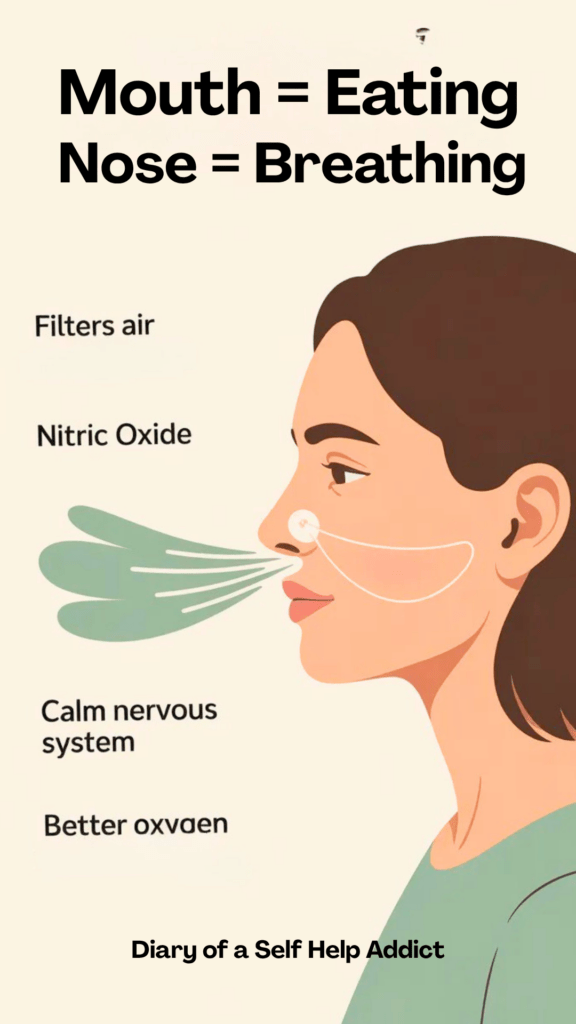
- Nose = breathing
- Mouth = eating, talking, emergency backup breathing
Yet somewhere along the way, many of us flipped that script.
Chronic mouth breathing has become incredibly common, and it’s not harmless.
What’s So Bad About Mouth Breathing?
Let’s start here, because this is where most people have their “wait… what?” moment.
Mouth breathing:
- Bypasses your body’s natural filtration system
- Dries out your mouth (hello, bad breath + cavities)
- Reduces oxygen efficiency
- Can increase heart rate and stress
- Contributes to poor sleep and snoring
- It is linked to higher blood pressure.
- It can even affect facial structure over time (especially in kids)
When you breathe through your mouth, air goes straight into your lungs—unfiltered, unregulated, and unoptimized.
It’s like skipping security, climate control, and quality control all at once.
Why Nose Breathing Is So Powerful
Your nose isn’t just a hole for air—it’s a highly advanced system designed to optimize every breath you take.
1. Your Nose Is a Built-In Filter
Tiny hairs and mucus inside your nasal passages trap:
- Dust
- Allergens
- Bacteria
- Pollutants
So instead of sending all that junk straight to your lungs, your nose catches it first.
Think of it as your body’s first line of defense.
2. It Warms and Humidifies Air
Cold, dry air isn’t ideal for your lungs.
Your nose:
- Warms the air to body temperature
- Adds moisture
This makes breathing more efficient and less irritating to your respiratory system.
3. Nitric Oxide: The Secret Weapon
This is where things get really interesting.
Your sinuses produce something called nitric oxide, and it only gets picked up when you breathe through your nose.
Nitric oxide helps:
- Relax and widen blood vessels (vasodilation)
- Lower blood pressure
- Improve oxygen circulation
- Support immune function
- Calm the nervous system.
In other words… It’s a built-in performance enhancer and stress regulator.
When you mouth breathe, you completely miss out on this.
4. Better Oxygen Delivery
Here’s a twist most people don’t know:
Breathing slower and through your nose actually helps your body use oxygen more efficiently.
This is due to something called the Bohr effect (don’t worry, we’ll keep it simple):
- Nose breathing increases carbon dioxide tolerance.
- This helps oxygen release from your blood into your tissues.
So even though you may feel like you’re getting “more air” through your mouth, your body is actually using it less effectively.
5. Nervous System Regulation
Your breath is one of the fastest ways to influence your nervous system.
- Fast, shallow mouth breathing → stress, anxiety, fight-or-flight
- Slow, controlled nose breathing → calm, rest-and-digest
If you’re constantly feeling “on edge,” your breathing pattern might be part of the problem.
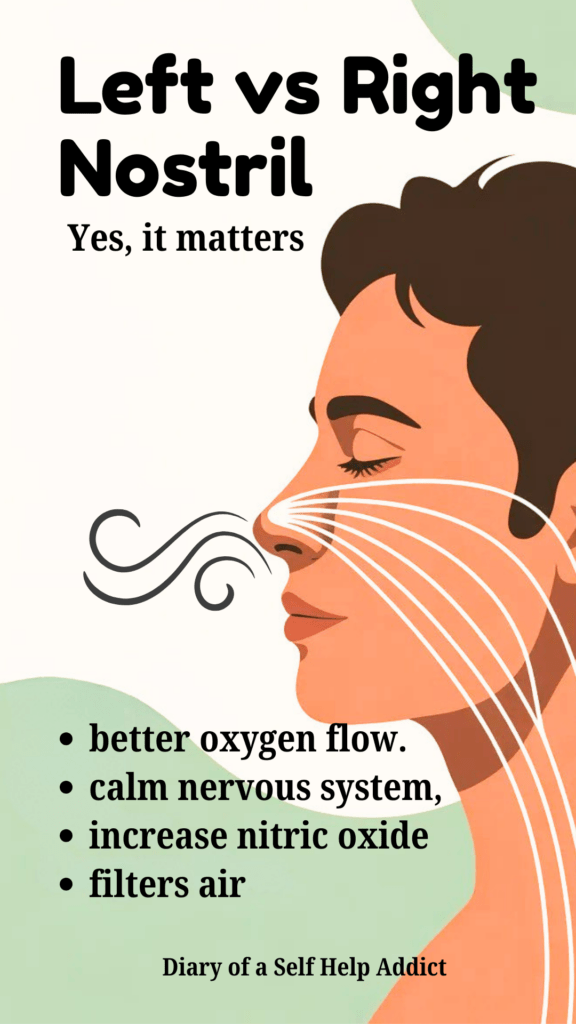
Right Nostril vs. Left Nostril: Yes, It Matters
This is where things get a little more nuanced, but also really cool.
Your body naturally cycles airflow between nostrils throughout the day (this is called the nasal cycle). But intentionally focusing on one side can influence how you feel.
Right Nostril Breathing = Energy Mode
Breathing primarily through your right nostril is associated with:
- Increased alertness
- Higher energy
- Mild stimulation of the sympathetic nervous system
Think: morning boost, pre-workout, when you need to focus.
Left Nostril Breathing = Calm Mode
Breathing through your left nostril is linked to:
- Relaxation
- Reduced heart rate
- Activation of the parasympathetic (rest-and-digest) system
Think: winding down, stress relief, before bed.
Signs You Might Be a Mouth Breather
Not sure where you fall? Here are some clues:
- You wake up with a dry mouth or sore throat.
- You snore or sleep with your mouth open.
- You feel fatigued even after “sleeping.”
- You breathe heavily during light activity.
- You notice bad breath despite good hygiene.
- You feel anxious or wired often.
If you’re nodding along… this might be something to pay attention to.
Simple Breathing Techniques to Try
No overwhelm here—just simple, doable shifts.
1. Basic Nose Breathing Awareness
Start here:
- Close your mouth
- Breathe in and out through your nose.
- Keep it slow and quiet.
Do this during:
- Walking
- Driving
- Watching TV
- Doctor appointments, before they check your blood pressure. (Great for those with “white coat syndrome)
It sounds basic, but awareness is step one.
2. Box Breathing (Great for Stress)
- Inhale through your nose for 4
- Hold for 4
- Exhale through your nose for 4
- Hold for 4
Repeat for a few minutes.
This is amazing for quickly calming your nervous system.
3. Left Nostril Breathing (For Relaxation)
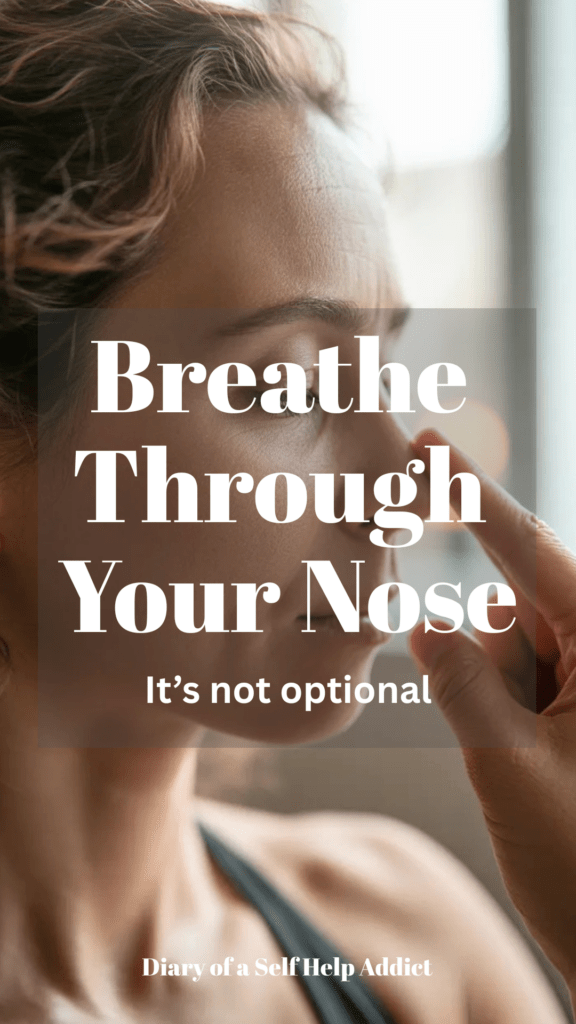
- Use your finger to gently close your right nostril.
- Breathe in and out slowly through your left nostril.
Try this:
- Before bed
- When you feel anxious
- After a long day
4. Right Nostril Breathing (For Energy)
- Close your left nostril.
- Breathe in and out through your right side.
Great for:
- Morning sluggishness
- Midday slump
- Pre-workout boost
5. Nasal Breathing During Exercise
This one’s a game-changer.
Try to keep your mouth closed during:
- Walking
- Light cardio
- Warm-ups
It may feel harder at first—but over time, it improves endurance and oxygen efficiency.
What About Sleeping?
This is a big one.
If you’re mouth breathing at night, you’re missing out on hours of optimal breathing.
Some simple tips:
- Practice nose breathing during the day (this carries over)
- Keep your nasal passages clear (saline, hydration, etc.)
- Consider gentle mouth taping (only if safe and comfortable for you)
Better breathing at night = better sleep, better recovery, better everything.
This post contains affiliate links. As an Amazon Associate, I may earn a small commission when you make a purchase through my links, at no extra cost to you. Thank you for supporting my small business! Read my privacy policy and disclosure here.
The Bigger Picture
This isn’t about perfection—it’s about awareness and small, meaningful shifts.
You don’t need to become a “perfect breather” overnight.
But understanding that your nose is for breathing, your mouth is for eating can change how you…
- Sleep
- Handle stress
- Perform physically
- Feel day to day
And the best part?
It’s free.
No supplements, no gadgets, no complicated routines.
Just using your body the way it was designed.
Kelly’s Thoughts
Every breath is an opportunity to help or hinder your body. Use your nose, not your mouth, whenever possible.
Nose breathing:
- Filters
- Calms
- Optimizes
- Heals
Mouth breathing:
- Bypasses
- Stresses
- Disrupts
Small habit. Massive impact.
Connect with me
If you love learning about simple, slightly unexpected ways to improve your health like this…
Drop a comment below and tell me:
👉 Did you realize how powerful your breath is?
👉 Or are you now side-eyeing your mouth breathing habits? 😅
And let me know what other “everyday things we’re doing wrong” you want to dive into next—we’re learning this stuff together.
Pin it for later
Leave a Reply