Trying to Eat Healthy, But Feeling Overwhelmed by Nutrition Advice?
One week we’re told carbs are the enemy. The next week it’s seed oils. Then suddenly everyone is talking about high-protein diets, intermittent fasting, collagen, creatine, or the latest superfood.
It’s no wonder so many people feel confused about what they should actually be eating.
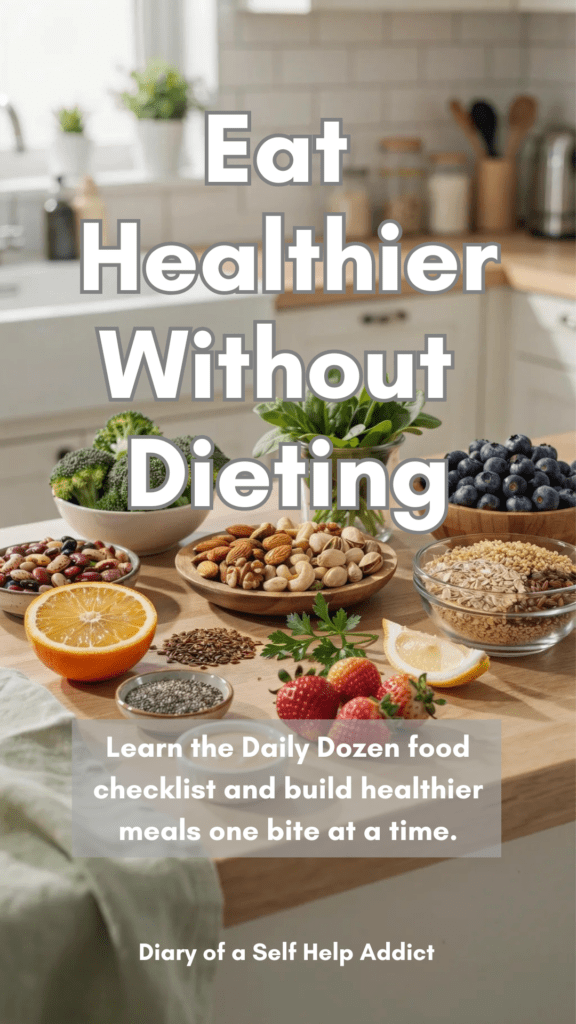
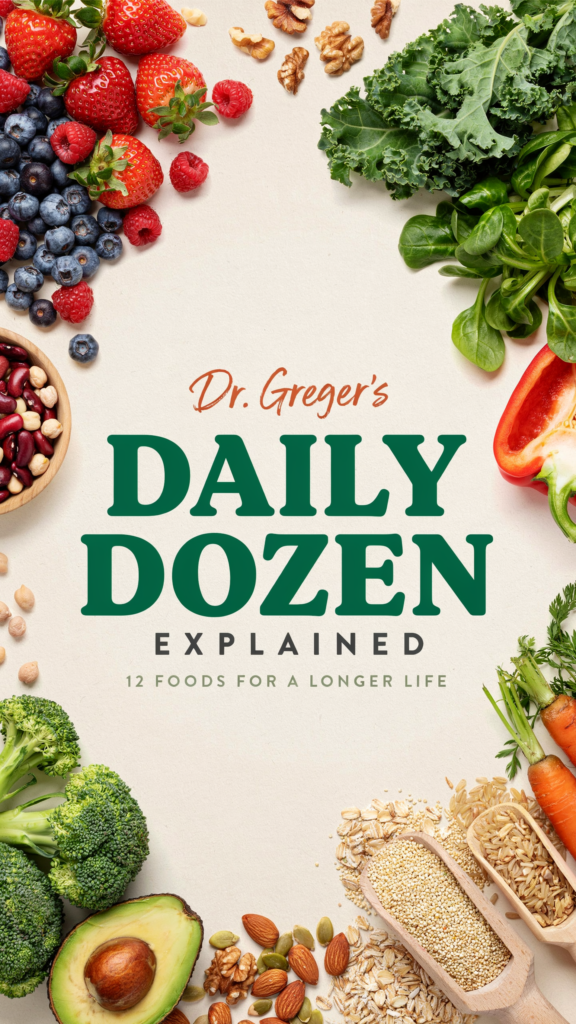
If you’ve ever wished someone would simply hand you a science-backed checklist of healthy foods to include each day, you’re going to love Dr. Michael Greger’s Daily Dozen.
Rather than focusing on what you shouldn’t eat, the Daily Dozen encourages you to fill your plate with foods consistently associated with better health, disease prevention, and longevity. It’s a refreshingly positive approach to nutrition that shifts the focus from restriction to nourishment.
And here’s the best part… You don’t have to be vegan or vegetarian to benefit from it.
Whether you eat meat every day, enjoy fish a few times a week, follow the Mediterranean diet, or already eat mostly whole-food, plant-based meals, the Daily Dozen can help you eat more of the foods that research links to better health.
Think of it as a daily checklist instead of a strict diet.
Some days you’ll check every box. Other days you’ll only hit a few. That’s perfectly okay. Progress, not perfection, is what matters.
If you’re looking for a simple habit to make your meals more colorful, more nutritious, and more satisfying, the Daily Dozen is a great place to start.
Who Is Dr. Michael Greger?
Dr. Michael Greger is a physician, internationally recognized speaker, New York Times bestselling author, and the founder of NutritionFacts.org, a nonprofit organization dedicated to sharing evidence-based nutrition information with the public.
Rather than promoting fad diets or relying on opinions, Dr. Greger and his team review thousands of peer-reviewed scientific studies each year to identify nutrition recommendations that are supported by the best available research.
Over the years, he’s written several bestselling books that have helped introduce millions of people to the benefits of eating more whole plant foods, including:
- How Not to Die – explores how nutrition may help prevent and even reverse many of the leading causes of premature death.
- How Not to Diet – a deep dive into the science of healthy, sustainable weight loss without gimmicks or restrictive fad diets.
- How Not to Age – examines the latest research on nutrition and lifestyle habits that may promote healthy aging & longevity.
- The How Not to Age Cookbook – practical recipes inspired by the latest longevity research.
- The How Not to Die Cookbook – over 100 recipes built around the Daily Dozen principles.
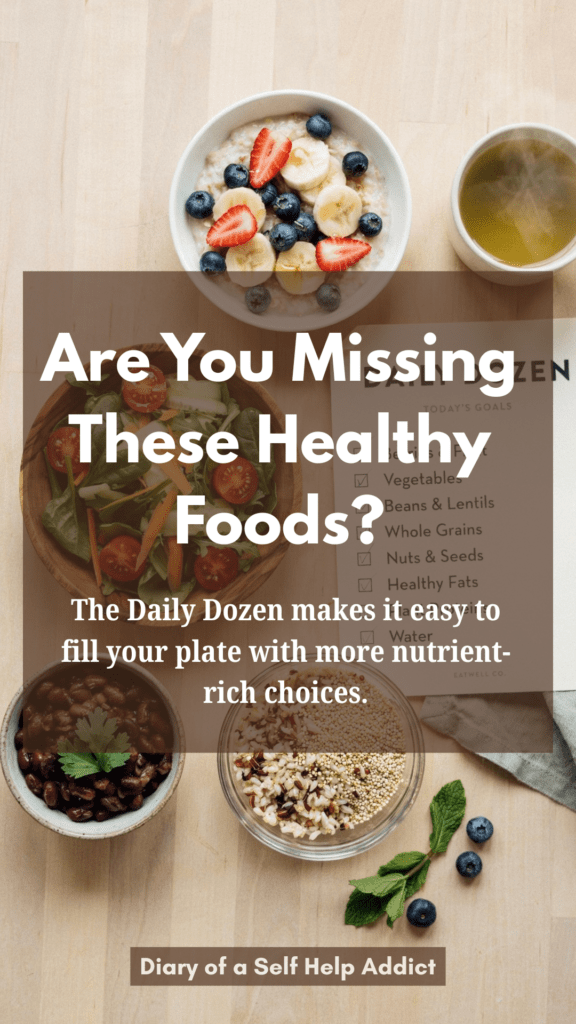
One of Dr. Greger’s most practical tools is the Daily Dozen, a simple checklist designed to help people include more nutrient-rich foods in their everyday meals.
I personally love that it doesn’t require complicated meal plans or expensive supplements. Instead, it focuses on foods that are affordable, widely available, and backed by decades of nutrition research.
As an Amazon Associate, I may earn a small commission on purchases from my links at no extra cost to you. Thank you for supporting my small business!
What Is the Daily Dozen?
The Daily Dozen isn’t a meal plan. It isn’t a calorie-counting program. It isn’t another trendy diet.
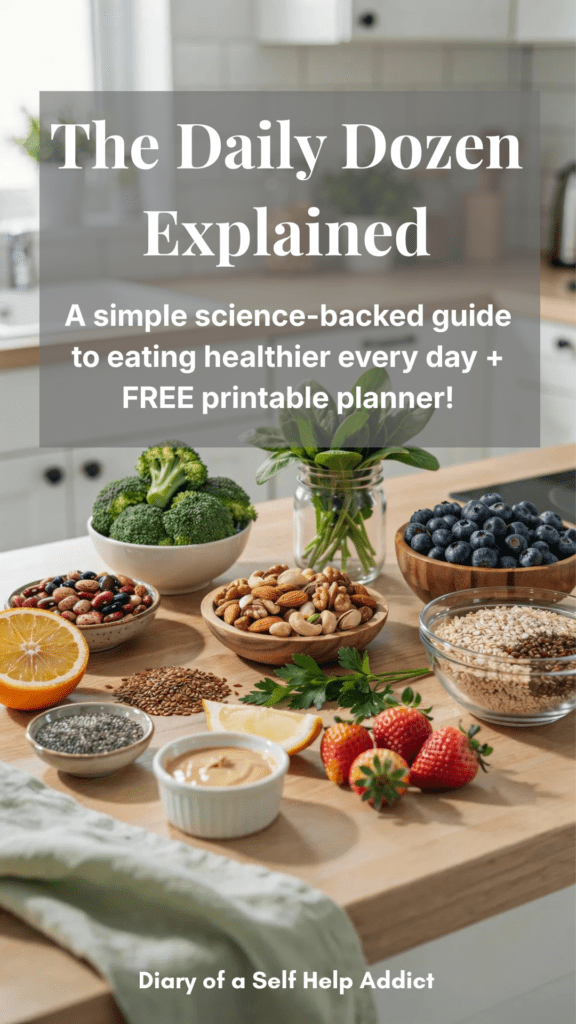
Instead, it’s a simple checklist of foods that research has repeatedly associated with better overall health.
Each category represents foods naturally rich in vitamins, minerals, antioxidants, fiber, and thousands of beneficial plant compounds known as phytochemicals.
These foods have been linked to numerous health benefits, including supporting:
- Heart health
- Brain health and cognitive function
- Healthy blood sugar levels
- A healthy gut microbiome
- Healthy aging
- Immune function
- Reduced inflammation
- Healthy weight management
Rather than asking yourself, “What foods should I cut out?”, the Daily Dozen encourages a different question:
“How can I add more nourishing foods to my plate today?”
That small shift in mindset can completely change the way you approach healthy eating.
Instead of feeling deprived, you begin focusing on abundance, adding colorful fruits, hearty beans, leafy greens, whole grains, nuts, seeds, herbs, and spices that nourish your body from the inside out.

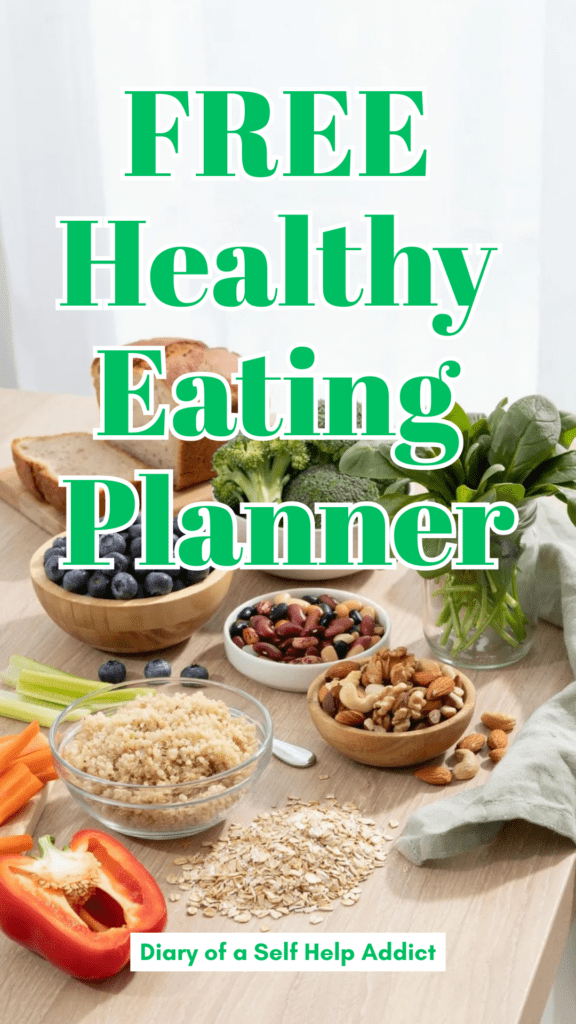
🎁 FREE Printable Healthy Eating Guide
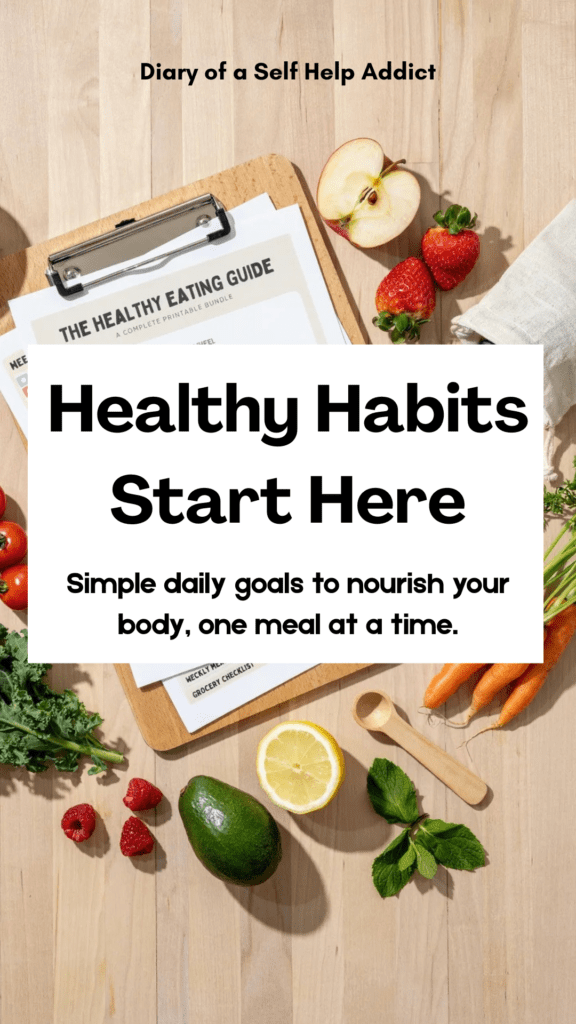
Want to make the Daily Dozen even easier? I’ve created a FREE 6-page Healthy Eating Guide that includes:
- Daily Checklist
- Weekly Habit Tracker
- Grocery Shopping List (2-pages)
- Serving Size Cheat Sheet
- Meal Planner
Simply enter your email, and I’ll send it straight to your inbox!
Can Meat Eaters Follow the Daily Dozen?
Absolutely!
One of the biggest misconceptions about the Daily Dozen is that it’s only for vegans or vegetarians.
While Dr. Greger personally recommends a whole-food, plant-based eating pattern, the Daily Dozen can be a valuable guide for anyone looking to improve their diet.
If you enjoy grilled chicken on your salad, salmon with roasted vegetables, turkey chili, or eggs for breakfast, you can still use the Daily Dozen as your foundation.
Think of it this way:
Instead of asking yourself what you need to eliminate, ask yourself how many of these nutrient-packed plant foods you can include throughout the day.
In fact, research consistently shows that most Americans don’t eat enough fruits, vegetables, legumes, or whole grains—regardless of whether they eat meat.
The Daily Dozen helps fill those nutritional gaps while making meals more satisfying, flavorful, and naturally rich in fiber and antioxidants.
That’s one of the reasons I appreciate this approach so much. It’s not about chasing perfection. It’s about making small, sustainable improvements that can add up over time.
Why These Foods? The Science Behind the Daily Dozen
One question I had when I first learned about the Daily Dozen was, “Why these foods?”
The answer lies in decades of nutrition research.
Scientists have discovered that whole plant foods contain thousands of naturally occurring compounds that work together to support our health. These include:
- Polyphenols
- Flavonoids
- Anthocyanins
- Carotenoids
- Lignans
- Sulforaphane
Many of these compounds act as antioxidants, helping protect our cells from oxidative stress while supporting healthy aging and normal immune function.
The Daily Dozen also emphasizes one nutrient that many Americans don’t get enough of: fiber.
Unlike animal foods, whole plant foods naturally contain fiber, which feeds the beneficial bacteria living in our gut. A healthy gut microbiome has been linked to better digestion, healthy cholesterol levels, blood sugar regulation, immune health, and even mood and brain function.
Another reason the Daily Dozen is so effective is its emphasis on variety.
Each fruit, vegetable, bean, herb, spice, and whole grain contains its own unique combination of nutrients and protective plant compounds. Eating a colorful variety of foods helps maximize those benefits rather than relying on just one or two “superfoods.”
No single food will make or break your health.
But consistently eating a wide variety of nutrient-dense plant foods—day after day, year after year—can have a profound impact on your long-term health.
The Daily Dozen Food Categories
Now for the fun part! Let’s break down each of the Daily Dozen categories, including the recommended servings, examples of foods that count, and why Dr. Greger recommends including them in your daily routine.
Remember, this isn’t about checking every single box every day. Think of these as goals to work toward rather than strict rules.
Even adding a few more of these foods to your meals each day can be a step in the right direction.
1. Beans (3 Servings Per Day)
Serving Size Examples
- ½ cup cooked beans or lentils
- ¼ cup hummus
- ½ cup split peas
- ½ cup edamame
Beans (legumes) are one of the healthiest foods you can eat, yet they’re often overlooked.
Whether you prefer black beans, kidney beans, chickpeas, lentils, navy beans, pinto beans, or split peas, they’re packed with nutrients your body loves.
Beans are an excellent source of:
- Plant protein
- Fiber
- Iron
- Folate
- Magnesium
- Potassium
- Resistant starch
One of their biggest superpowers is their fiber content. Fiber helps feed the beneficial bacteria in your gut, which in turn produce compounds that support digestive health, immune function, and even heart health.
Research has also shown that people who regularly eat legumes tend to have healthier cholesterol levels, better blood sugar control, and may feel fuller longer after meals.
Easy Ways to Eat More Beans
- Add black beans to tacos or burrito bowls.
- Toss chickpeas into salads.
- Blend hummus as a sandwich spread.
- Add lentils to soups and stews.
- Roast chickpeas for a crunchy snack.
My Tip: If you’re new to eating beans, increase your intake gradually and drink plenty of water. Your gut bacteria may need a little time to adjust to the extra fiber!
2. Berries (1 Serving Per Day)
Serving Size Examples
- ½ cup fresh berries
- ½ cup frozen berries
- ¼ cup dried berries
If there were a “superfood” category, berries would definitely be on the list.
Blueberries, raspberries, strawberries, blackberries, and even cranberries are loaded with antioxidants called anthocyanins, which give many berries their beautiful red, blue, and purple colors.
These powerful plant compounds have been studied for their potential role in supporting:
- Brain health
- Heart health
- Healthy aging
- Memory
- Reduced oxidative stress
Berries are also naturally high in fiber while being relatively low in calories, making them an easy addition to breakfast, snacks, or desserts.
Easy Ways to Eat More Berries
- Add frozen berries to oatmeal.
- Blend them into smoothies.
- Sprinkle them on yogurt.
- Enjoy them as a naturally sweet dessert.
Frozen berries are just as nutritious as fresh and often more affordable.
3. Other Fruits (3 Servings Per Day)
Serving Size Examples
- 1 medium apple
- 1 orange
- 1 banana
- 1 peach
- 1 cup melon
- ¼ cup dried fruit
Whole fruit has gotten an unfair reputation over the years because of its natural sugar content.
The truth is that whole fruits also contain fiber, vitamins, minerals, water, and antioxidants that help slow the absorption of those natural sugars.
Studies consistently associate higher fruit intake with better overall health and a lower risk of many chronic diseases.
Try to eat a rainbow of fruits throughout the week, including:
- Apples
- Pears
- Citrus fruits
- Kiwi
- Mango
- Grapes
- Pineapple
- Peaches
- Cherries
Different colors provide different protective nutrients, so variety really is key.
4. Greens (2 Servings Per Day)
Serving Size Examples
- 1 cup raw greens
- ½ cup cooked greens
Leafy greens are nutritional powerhouses.
Some of the healthiest choices include:
- Spinach
- Kale
- Swiss chard
- Collard greens
- Mustard greens
- Arugula
- Romaine lettuce
These vegetables are rich in nutrients such as vitamin K, folate, lutein, and nitrates (not the same ones that are added to processed meat!), which help support healthy blood flow.
Greens are also surprisingly versatile.
Don’t limit them to salads! Try adding spinach to smoothies, tossing kale into soups, or sautéing greens with garlic as a quick side dish.
5. Cruciferous Vegetables (1 Serving Per Day)
Serving Size Examples
- ½ cup chopped broccoli
- ½ cup cauliflower
- ½ cup Brussels sprouts
- ½ cup cabbage
- Bok choy
- Radishes
- Horseradish
Cruciferous vegetables deserve their own category because they contain unique compounds called glucosinolates.
When these vegetables are chopped or chewed, glucosinolates are converted into compounds like sulforaphane, which has been extensively studied for its potential health benefits.
Research suggests cruciferous vegetables may help support:
- Healthy detoxification pathways
- Cellular health
- Heart health
- Healthy aging
A simple trick is to chop fresh broccoli about 40 minutes before cooking. This gives the natural enzyme, myrosinase, time to produce more sulforaphane before heat inactivates it.
6. Other Vegetables (2 Servings Per Day)
Serving Size Examples
- ½ cup cooked vegetables
- 1 cup raw vegetables
This category includes everything that doesn’t fit into the leafy green or cruciferous categories.
Think colorful!
Examples include:
- Bell peppers
- Tomatoes
- Mushrooms
- Carrots
- Zucchini
- Eggplant
- Asparagus
- Green beans
- Onions
- Sweet potatoes
Each color represents a different vitamin, mineral, or antioxidant. The more colorful your plate, the more diverse the nutrients you’re likely getting.
7. Flaxseed (1 Tablespoon Ground Daily)
Ground flaxseed may be tiny, but it’s incredibly nutritious.
Dr. Greger specifically recommends ground flaxseed because whole flaxseeds often pass through the digestive tract undigested.
Flaxseed is rich in:
- Omega-3 fatty acids (ALA)
- Fiber
- Protein
- Lignans
Lignans are plant compounds that have been studied for their antioxidant properties and their potential role in supporting heart health.
Ground flaxseed has a mild, nutty flavor and is easy to add to:
- Oatmeal
- Smoothies
- Overnight oats
- Homemade muffins
- Pancakes
- Plant-based yogurt
Tip: Store ground flaxseed in the refrigerator or freezer to help preserve its healthy fats.
8. Nuts & Seeds (1 Serving Per Day)
Serving Size Examples
- ¼ cup nuts
- 2 tablespoons nut butter
- 2 tablespoons seeds
Nuts and seeds provide healthy unsaturated fats, protein, fiber, and important minerals like magnesium and zinc.
Excellent choices include:
- Walnuts
- Almonds
- Pistachios
- Cashews
- Pumpkin seeds
- Sunflower seeds
- Chia seeds
- Hemp hearts
Research has linked regular nut consumption with improved heart health and a lower risk of cardiovascular disease. A small handful each day is all you need.
9. Herbs & Spices (1 Serving Per Day)
Herbs and spices don’t just make food taste better; they’re packed with beneficial plant compounds. Dr. Greger especially highlights turmeric, thanks to its active compound curcumin.
Curcumin has been widely studied for its antioxidant and anti-inflammatory properties. For better absorption, pair turmeric with a pinch of black pepper, which contains piperine.
Other flavorful options include:
- Cinnamon
- Ginger
- Garlic
- Rosemary
- Oregano
- Basil
- Parsley
Cooking with herbs and spices is one of the easiest ways to add flavor while reducing your reliance on excess salt.
10. Whole Grains (3 Servings Per Day)
Serving Size Examples
- ½ cup cooked oatmeal
- ½ cup brown rice
- ½ cup quinoa (a complete protein!)
- 1 slice whole-grain bread
- ½ cup barley
Unlike refined grains, whole grains still contain the bran and germ, where much of the fiber, vitamins, minerals, and antioxidants are found.
Whole grains provide:
- Fiber
- B vitamins
- Magnesium
- Iron
- Complex carbohydrates
They provide long-lasting energy while supporting digestive health.
Great choices include oats, quinoa, barley, brown rice, buckwheat, millet, and whole wheat.
11. Healthy Beverages (About 60 Ounces Per Day)
Hydration often gets overlooked, but it’s essential for nearly every function in the body.
Dr. Greger recommends aiming for about 60 ounces of healthy beverages each day, including:
- Water
- Green tea
- Hibiscus tea
- Herbal teas
Green tea contains catechins, while hibiscus tea has been studied for its potential role in supporting healthy blood pressure.
Of course, your hydration needs may vary depending on your activity level, climate, age, and individual health needs.
12. Daily Exercise
The Daily Dozen isn’t only about food. Dr. Greger also encourages daily movement, recommending approximately:
- 90 minutes of moderate activity, or
- 40 minutes of vigorous activity
That may sound like a lot at first, but remember, it doesn’t have to happen all at once.
Walking, gardening, dancing, swimming, strength training, cycling, hiking, and yes… Pilates 😉 all count toward your daily movement goals.
As a Pilates instructor, I love seeing how regular movement improves not only strength and flexibility but also balance, posture, mobility, and overall quality of life.
The best exercise is the one you’ll actually enjoy enough to keep doing.
Vitamin B12: The One Supplement Dr. Greger Recommends
If you’ve read any of Dr. Greger’s books or watched his videos, you’ve probably heard him say that vitamin B12 is the one supplement that everyone following a whole-food, plant-based diet should take.
Why?
Because vitamin B12 isn’t made by plants (or animals)… It’s produced by certain bacteria. In the past, people may have gotten small amounts from untreated water or soil on freshly harvested foods. Today, our food and water supply is much cleaner (which is a good thing!), but it also means we don’t naturally get reliable amounts of B12 that way.
While meat, dairy, and eggs contain vitamin B12, that’s because animals either consume bacteria or are given B12-fortified feed. If you’re eating little to no animal products, it’s important to get B12 from fortified foods or a supplement.
Vitamin B12 plays a critical role in:
- Healthy nerve function
- Red blood cell production
- DNA synthesis
- Brain health
- Energy metabolism
A deficiency can develop slowly over time and may cause symptoms such as:
- Fatigue
- Weakness
- Numbness or tingling in the hands and feet
- Difficulty walking
- Memory problems
- Mood changes
- Anemia
Because symptoms may not appear until deficiency is advanced, prevention is much easier than treatment.
Dr. Greger’s Recommendation
Dr. Greger recommends taking either:
- At least 2,000 mcg (µg) once per week, or
- At least 50 mcg daily
He suggests choosing a chewable, sublingual, or liquid supplement, ideally taken on an empty stomach to help maximize absorption.
Keep in mind: Older adults and people taking medications such as metformin or acid-reducing medications (like proton pump inhibitors) may have more difficulty absorbing vitamin B12. If that applies to you, talk with your healthcare provider about whether your B12 level should be checked.
Vitamin D: What If You Don’t Get Enough Sunshine?
Vitamin D is another nutrient Dr. Greger discusses frequently.
Unlike most vitamins, your body can actually make vitamin D when your skin is exposed to sunlight. However, many people spend much of their day indoors, wear sunscreen to protect their skin, live in northern climates, or simply don’t get enough regular sun exposure.
If you don’t regularly get 15 to 20 minutes of sunlight most days of the week, Dr. Greger recommends considering a vitamin D3 supplement.
Vitamin D plays an important role in:
- Bone health
- Calcium absorption
- Muscle function
- Immune function
The amount of vitamin D each person needs varies based on factors such as age, skin tone, where they live, the season, and their overall health.
Because both low and excessive vitamin D levels can be problematic, it’s a good idea to ask your healthcare provider whether checking your vitamin D level with a simple blood test is appropriate before starting long-term supplementation.
Do You Have to Eat Every Serving Every Day?
Absolutely not. In fact, I think this is one of the most refreshing parts of the Daily Dozen.
It isn’t about perfection or guilt. And it definitely isn’t about beating yourself up for forgetting to eat your flaxseed today.
Instead, think of the Daily Dozen as a gentle guide; a way to remind yourself to include more of the foods that nourish your body.
Some days you may check every box. On other days, you may only manage a few.
Life happens.
Maybe you grabbed breakfast on the go, had a busy workday, or enjoyed pizza with friends. That’s okay!
Healthy eating isn’t about one meal or even one day. It’s the choices we make consistently over weeks, months, and years that have the biggest impact.
Simple Tips for Reaching the Daily Dozen
Trying to eat from 12 different food categories every day can sound overwhelming at first. Fortunately, many meals naturally check off several boxes at once.
Here are a few easy ideas:
Breakfast
Try a bowl of oatmeal topped with blueberries, sliced banana, ground flaxseed, walnuts, and a sprinkle of cinnamon.
- Whole grains
- Berries
- Other fruit
- Flaxseed
- Nuts
- Herbs & spices
Lunch
Build a colorful salad with spinach, chickpeas, shredded carrots, cucumbers, tomatoes, broccoli, sunflower seeds, and a simple vinaigrette.
- Greens
- Beans
- Other vegetables
- Cruciferous vegetables
- Nuts & seeds
Dinner
Make a burrito bowl with brown rice, black beans, roasted peppers, onions, corn, avocado, salsa, and fresh cilantro.
- Whole grains
- Beans
- Other vegetables
- Herbs
Snacks
Keep healthy options within easy reach:
- Fresh fruit
- Baby carrots
- Roasted chickpeas
- A handful of almonds or walnuts
- Hummus with vegetables
- Frozen berries for smoothies
You’ll probably find you’re checking off more boxes than you realize!
My Thoughts on the Daily Dozen
One of the reasons I appreciate the Daily Dozen so much is because it shifts the conversation away from restriction.
Instead of constantly asking ourselves what we should cut out, it encourages us to ask:
“What healthy foods can I add today?”
That’s a mindset I can get behind. I don’t personally stress about checking every single box every day, and I don’t think you should either. Some days are better than others.
But if using this checklist helps you eat another serving of vegetables, swap refined grains for whole grains, add berries to your breakfast, or include beans a little more often, I’d call that a win.
Healthy living isn’t about being perfect. It’s about making small choices that support your health over time.
Frequently Asked Questions
Is the Daily Dozen only for vegans?
No. Although Dr. Greger designed the checklist around whole plant foods, anyone can benefit from eating more fruits, vegetables, beans, whole grains, nuts, and seeds.
Can I eat meat and still follow the Daily Dozen?
Absolutely.
The Daily Dozen focuses on what to add to your diet, not necessarily what to eliminate. Many people use it alongside Mediterranean, flexitarian, or omnivorous eating patterns.
Do frozen fruits and vegetables count?
Yes!
Frozen produce is usually picked at peak ripeness and can be just as nutritious as fresh. It’s also convenient and often more budget-friendly.
Are canned beans okay?
Definitely.
Look for low-sodium or no-salt-added varieties when possible, and give them a quick rinse before using to help reduce sodium.
Do potatoes count?
Yes. Potatoes and sweet potatoes can count toward your “other vegetables” servings. Baking, steaming, or roasting them is generally a healthier choice than deep frying.
Is the Daily Dozen meant for weight loss?
Not specifically.
The Daily Dozen was created to encourage eating more nutrient-dense foods associated with better long-term health. That said, many people find that increasing their intake of fiber-rich whole foods naturally helps them feel fuller and more satisfied, which may support healthy weight management.
Ready to Get Started?
Don’t forget to grab your FREE Healthy Eating Guide before you go! It’s the perfect companion to this article and will help you easily track your progress each day.
Kelly’s Conclusion
Healthy eating doesn’t have to be complicated. You don’t need expensive superfoods, complicated meal plans, or the latest diet trend to improve your health.
Sometimes, the simplest approach is also one of the most effective.
Dr. Greger’s Daily Dozen offers a practical, evidence-based checklist that encourages us to eat more of the foods most of us could use a little more of—beans, berries, leafy greens, colorful vegetables, whole grains, nuts, seeds, herbs, spices, and water.
Whether you’re completely plant-based, follow a Mediterranean-style diet, or simply want to make healthier choices one meal at a time, the Daily Dozen can be a flexible guide to help you build a more nourishing plate.
Remember, you don’t have to be perfect. You don’t have to check every box.
Every serving of fruits, vegetables, beans, or whole grains is a step in the right direction, and those small choices really do add up over time.
So instead of asking yourself, “Did I eat perfectly today?”, maybe ask yourself:
“What healthy food can I add to my next meal?”
Sometimes, that simple shift in perspective can make healthy eating feel a whole lot easier.
I’d Love to Hear From You!
Do you already follow the Daily Dozen, or is this your first time hearing about it?
Which Daily Dozen category do you think would be the easiest for you to check off each day, and which one might be the biggest challenge?
Leave a comment below! I’d love to hear your thoughts and maybe even pick up a few meal ideas from you.
This article is inspired by Dr. Michael Greger’s Daily Dozen® and is intended for educational purposes. The free printable included in this post is my own original creation and is not affiliated with or endorsed by Dr. Michael Greger or NutritionFacts.org. Please read our privacy policy and disclaimer here.
Pin it for later
Leave a Reply