
This topic has been on my agenda for a while.
I’ve wanted to discuss vitamin C for a long time. It’s considered basic—almost too basic to question. Most people know it’s good for you, right?
Immune system. Oranges. Done.
But as I dug deeper (and by digging, I mean falling into one of my classic research rabbit holes), I realized there’s more to vitamin C than most of us realize. This led me to reconsider what we all think we know.
What prompted me to write this was National Vitamin C Day (April 4th), which I recently missed.
But honestly? That timing might actually be appropriate.
Because this isn’t about one day.
It’s about something most of us are doing regularly…
…but may not be doing it correctly.
What Vitamin C Actually Does (Beyond “Immunity”)
Vitamin C (ascorbic acid) is a potent antioxidant, meaning it helps protect your body from oxidative stress and cellular damage.
But it also plays a role in:
- Immune support
- Collagen production (skin, hair, joints 👀)
- Wound healing
- Reducing inflammation
- Supporting adrenal health
- Enhancing iron absorption
- Supporting bowel regularity (yes… really)
It actually helps convert iron into a form your body can absorb more easily—especially important for women or anyone dealing with low iron.
And the bowel support? That’s something we recommend all the time in clinical practice.

Vitamin C for Constipation (Underrated Benefit)
This is something many people never hear about.
Vitamin C can help with:
Bowel regularity
At higher doses, it has an osmotic effect, drawing water into the intestines.
A common approach we used:
- Take 1000–2000 mg every 1–2 hours.
- Continue until you reach a loose stool.
- Then reduce slightly (by 1000–2000 mg)
That becomes your personal tolerance level
From there, you can:
- Use that dose temporarily.
- Help keep things moving regularly.
Magnesium can also be helpful alongside this.
Foods High in Vitamin C (This Surprised Me)
Most people think of oranges. I used to think so, too. But here’s what sent me down this whole rabbit hole…
Bell peppers, especially yellow, then red, have significantly more vitamin C than oranges.
Other great sources include:
- Kiwi
- Strawberries
- Broccoli
- Citrus fruits
Why Supplement at All?
Vitamin C is:
- Water-soluble (your body doesn’t store it well)
- Used up quickly during stress, illness, travel, and lack of sleep
So even if you eat well, your levels can fluctuate more than you think.
The Different Types of Vitamin C (Simplified)
This is where things get confusing, but it doesn’t have to be.
Ascorbic Acid (aka L-Ascorbic Acid)
- The standard, active form your body uses
- “L” refers to its molecular structure.
- Most common and affordable
- Can be harsh on sensitive stomachs
Buffered Vitamin C (Sodium Ascorbate)
- Less acidic
- Gentler on digestion
- Better for higher dosing or sensitive individuals
Liposomal Vitamin C
- Encased in fat molecules for enhanced delivery
- Higher absorption potential
- Typically comes in gel, liquid, or capsule form.
- More expensive, but convenient
Whole-Food Vitamin C
- Derived from natural sources like:
- Camu camu
- Acerola cherry
- Amla
- Rose hips
- Contains bioflavonoids and cofactors
- Often marketed as more “natural,” but with a lower dose per serving.
Is Liposomal Vitamin C Necessary?
Short answer: not always.
It may:
- Absorb more efficiently
- Stay in circulation longer.
- It’s easier on digestion.
But it’s not required if you’re dosing consistently.
Why Some Experts Recommend Sipping Vitamin C All Day
Doctors like Thomas Levy talk about maintaining steady levels in the body.
Instead of taking one large dose…
The idea is to sip vitamin C throughout the day (roughly 7 am–7 pm)
Why?
- It’s used quickly
- Doesn’t stay in the bloodstream long
- Consistent levels may support immune function and recovery.
This is something I personally try to do more of—especially when traveling.
Routes of Vitamin C (More Than Just Pills)
Vitamin C can be used in several ways:
Oral (Capsules, Powders, Liquids)
- Most common
- Easy to dose and adjust
- Powders are great for sipping throughout the day.
Liposomal (Enhanced Oral)
- Comes in gels, liquids, or capsules
- Designed for better absorption
- Convenient for higher intake without large doses
Intravenous (IV)
- Administered in clinical settings
- Allows for very high doses
- Used in more targeted protocols
Topical (Skincare)
- Applied directly to the skin
- Supports collagen, brightness, and protection
Nasal (Less Common)
Important distinction:
👉 If used this way, it would be sodium ascorbate (buffered)
❌ NOT ascorbic acid (too irritating)
Some practitioners, like Suzanne Humphries, have discussed the many benefits and uses of Vitamin C in this way.
Quality Matters More Than You Think
Most vitamin C is derived from corn.
Which raises questions about:
- GMO sourcing
- Glyphosate exposure
This is why some people prefer:
- Organic
- Non-GMO
- Whole-food sources
Why Some Say You Shouldn’t Take Vitamin C
- “You just pee it out.”
- High doses may cause digestive upset.
- You can get enough from food.
The truth: it depends on the person, dose, and consistency.
Also worth noting… if you have a condition called G6PD deficiency, high doses of vitamin C may not be appropriate. It’s not super common, but it’s important to be aware of it, especially if you’re considering higher-dose or more frequent dosing strategies. Always something to check with your provider first.
What I Personally Use (And Why)
During COVID, vitamin C became a staple for me, and honestly, I still keep all of these on hand.
1. NutriBiotic Sodium Ascorbate Powder
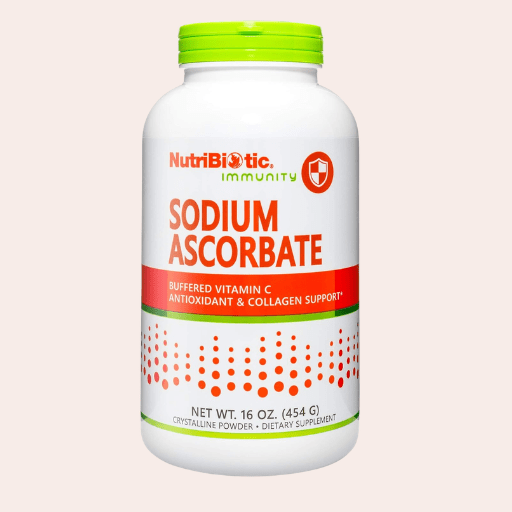
- Buffered (gentler)
- Great for higher dosing
- Easy to mix
👉 Heads up: it tastes VERY salty 😅
2. Liposomal Vitamin C
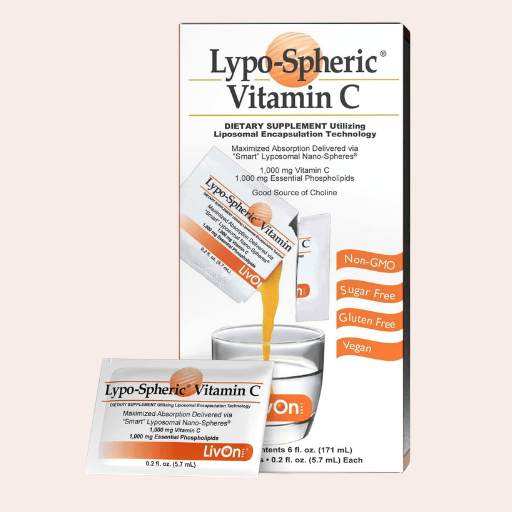
- Higher absorption
- Super convenient
3. My Go-To Daily/Sipping Option
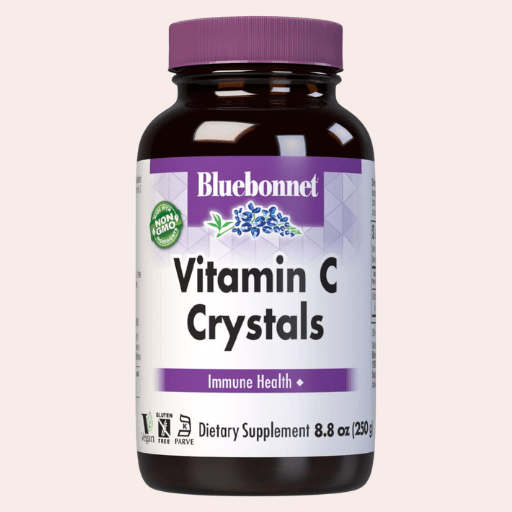
This is the one I use most often now.
- I’ll add it to my water and sip throughout the day.
- Especially when traveling or feeling run-down
- Easy way to stay consistent
And honestly… At times, I forget about it until I get sick again 😅
Then I’m like—“Oh, wait, I should be doing that again.”
Topical Vitamin C (Let’s Talk Skin)
Vitamin C applied topically can:
- Brighten skin
- Improve tone
- Support collagen
- Protect from environmental damage.
Important: It Oxidizes Easily
Vitamin C breaks down when exposed to:
- Air
- Light
Look for:
- Dark amber bottles
- Airtight packaging
- Individual capsule form
My Favorite Options
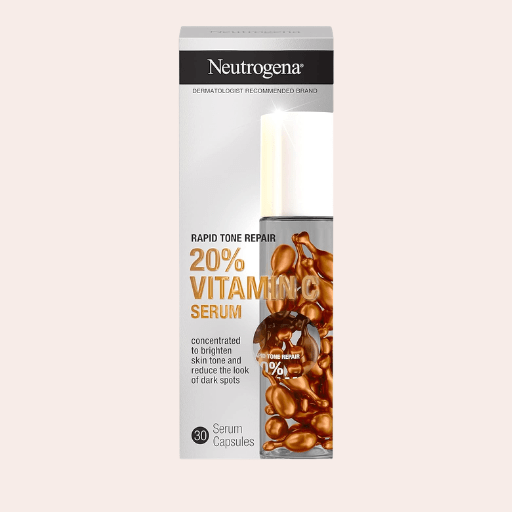
Capsules (great for stability):
Neutrogena Vitamin C Capsules
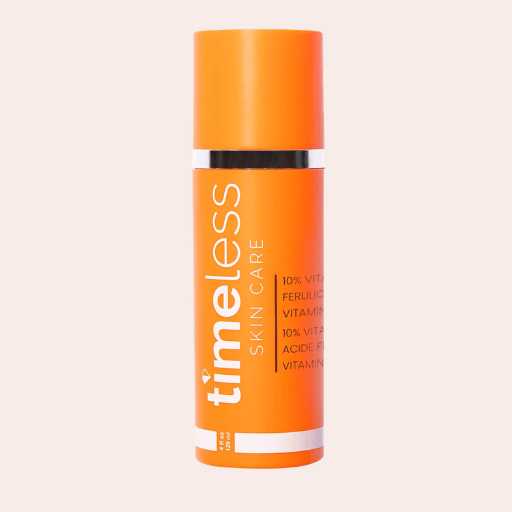
Strong liquid serum (great for face & body):
Timeless Vitamin C Serum
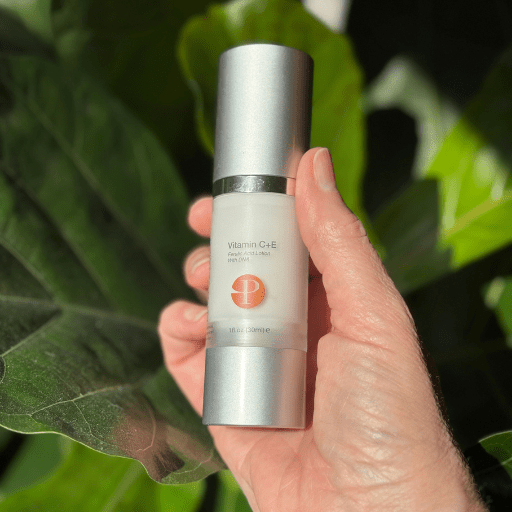
My aesthetic pick:
Photozyme Vitamin C Serum
(25% off) Code: KELLYL
How to Use Topical Vitamin C
- Apply in the morning.
- After cleansing
- Before moisturizer
- Always follow with SPF.
Kelly’s Thoughts
It’s kind of wild how something so “basic” can actually be so nuanced.
Vitamin C isn’t just about immunity.
It’s about:
- Daily resilience
- Skin health
- Recovery
- Supporting your body in small, consistent ways
And maybe most importantly…
Being intentional with simple habits that actually add up.
If you’ve been using vitamin C the same way for a long time, review these takeaways and consider which could benefit you most.
Try:
- Switching forms
- Spreading your dose out
- Paying attention to quality
- Or even just being more consistent.
Remember, improving your vitamin C routine isn’t about doing more. Focus on these simple habits to make a difference.
It’s about doing the basics better.
Connect with me
If you found this helpful, let me know 👇
I love going down these health rabbit holes, so tell me what you want me to dig into next.
And if you try any of these approaches (especially the sipping method 👀), I’d love to hear how it works for you.
Disclaimer: As an Amazon Associate, I earn from qualifying purchases. This means I may earn a small commission if you purchase through my links—at no extra cost to you. Read my privacy policy and disclosure here.
Pin it for later
There is so much information here. Thank you for breaking down all the different variations of Vitamin C available to us.
♥️♥️♥️
This was a fascinating read. Thank you so much! I’m going to re-evaluate our Vitamin C products and I love bell peppers and grow them so THAT is fabulous news 🙂
Thank you, Peggy! ♥️