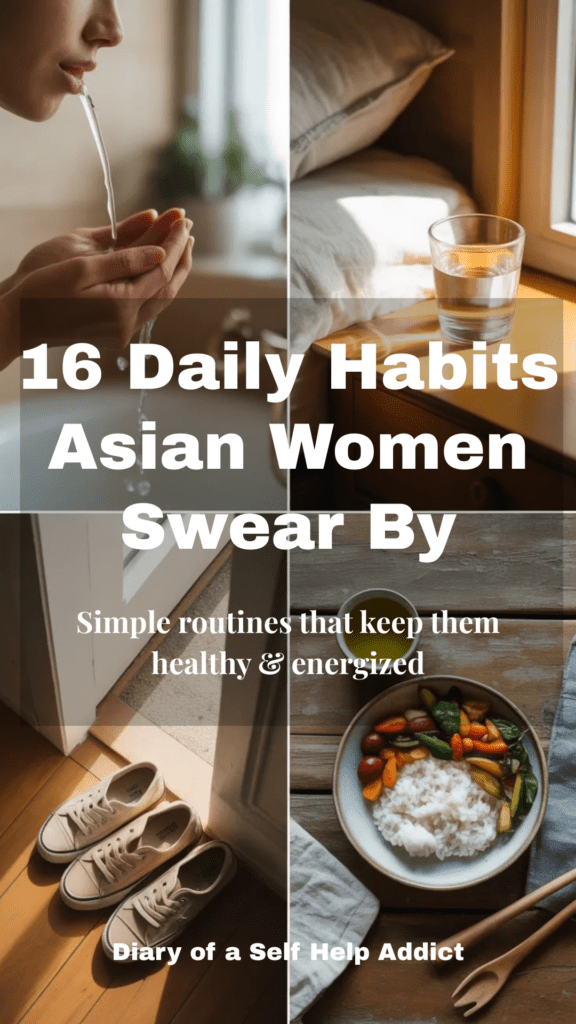
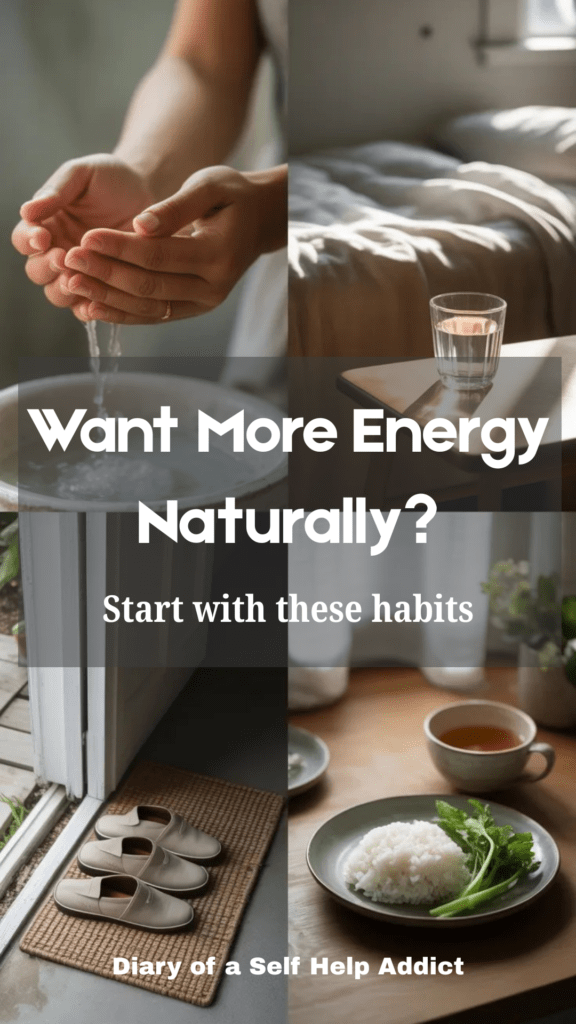
In this post, I’m sharing 16 daily habits of Asian women that support long-term health, steady energy, and overall well-being. These aren’t extreme or complicated… they’re small, intentional things done consistently that add up over time.
If you’ve ever wondered how some women seem to stay healthy, energized, and just well without constantly trying new diets, supplements, or routines… this might surprise you.
In many Asian cultures, health isn’t something you try to fix after the fact…it’s something you support every single day. Even small habits, like taking your shoes off before walking into your home, reflect that mindset. It’s not just about cleanliness. It’s about not tracking in dirt, bacteria, and pollutants from the outside world, and creating a space where your body can actually rest and recover.
That same philosophy shows up in so many other simple, daily routines.
They might seem almost too simple at first… but that’s kind of the point.
Morning Daily Habits That Set the Tone for the Day
These simple morning daily habits help support digestion, hydration, and overall health before the day even begins.
1. Salt Water Rinsing: A Simple Ritual That Prevents So Much
In countries like Japan and Korea, gargling with salt water isn’t just something you do when you’re sick… It’s preventative. Many people gargle:
- First thing in the morning
- When they return home from being out
- Again before bed
Children are often taught this habit early on, especially after school, to reduce their exposure to bacteria and viruses. Why it works:
- Helps flush bacteria from the throat and mouth
- Reduces inflammation
- May lower the risk of respiratory infections
It’s simple. It’s cheap. And it’s consistent. That’s the theme you’ll see again and again.
2. Warm Water First Thing in the Morning
Before coffee, food, or scrolling. Many Asian women start their day with warm water, not ice-cold water. Why? Because in traditional practices like Traditional Chinese Medicine (TCM), digestion is seen as a “fire.” Cold water is believed to dampen that fire, while warm water supports it.
Modern benefits include:
- Gentle hydration after sleep
- Stimulates digestion
- Supports circulation
It’s a small shift, but it sets the tone for how you treat your body all day.
Related Read: I DRANK APPLE CIDER VINEGAR EVERY MORNING FOR 2 WEEKS—HERE’S WHAT HAPPENED
3. They Avoid Ice-Cold Everything, Especially in the Morning
This one surprises a lot of people. In many Asian cultures, especially in TCM:
- Ice water is avoided.
- Cold foods are limited, especially in the morning.
The belief is that too much cold:
- Slows digestion
- Weakens energy flow
Instead, meals and drinks are often warm or room temperature. Even if you don’t fully subscribe to the philosophy, many people notice:
- Less bloating
- Better digestion
Daily Habits That Keep Your Environment Clean and Support Your Health
4. Take Your Shoes Off at the Door
This might seem like a small thing, but it says a lot about the overall approach to health.
In many Asian households, shoes never make it past the front door. It’s not just about keeping the floors clean; it’s about not bringing the outside world in with you.
Think about everything your shoes come into contact with throughout the day:
- Dirt and debris
- Bacteria
- Chemicals and pollutants from sidewalks, stores, and public spaces
When you walk that through your home, you’re spreading it onto the very surfaces where you relax, stretch, sit, and sometimes even lie down.
By leaving shoes at the door, you’re creating a cleaner, lower-toxin environment, one that supports your body rather than constantly exposing it to more toxins.
It’s simple. It takes two seconds. And over time, it makes a bigger difference than you might think.
Daily Eating Habits That Support Digestion and Energy
These daily eating habits focus on balance, digestion, and steady energy, not restriction or extremes.
5. Eat Until They’re 80% Full
In Japan, there’s a phrase: “Hara Hachi Bu.” It means eating until you’re about 80% full, not stuffed. Instead of eating until discomfort, the focus is on:
- Awareness
- Portion control
- Slowing down
This habit alone can:
- Prevent overeating.
- Support weight balance.
- Reduce strain on digestion.
It’s not about restriction. It’s about respect.
6. Keep Meals Simple and Balanced
Meals often follow a simple structure:
- Rice or grains
- Vegetables
- Protein
- Soup
Portions are smaller, but more varied.
This leads to:
- Balanced nutrition
- Less overeating
- Better digestion
7. Practice Mindful Eating
Meals aren’t rushed or distracted. Instead:
- Eating is slower
- Flavors are appreciated
- Hunger cues are respected.
This naturally leads to:
- Better digestion
- Greater satisfaction
- Less emotional eating
8. Prioritize Gut Health Naturally
Fermented foods are a staple, not a trend. Think:
- Kimchi
- Miso
- Natto
- Pickled vegetables
These foods are rich in probiotics, which:
- Support digestion.
- Strengthen the immune system.
- Influence mood and energy.
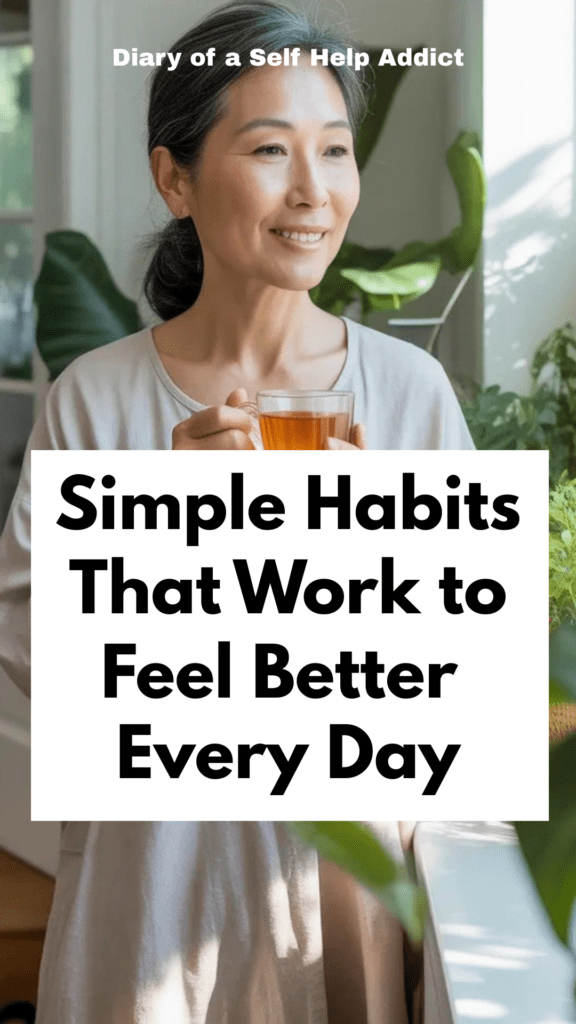
9. Tea Is a Daily Medicine
Instead of reaching for sugary drinks, many Asian women drink tea throughout the day. Some favorites include:
- Green tea (rich in antioxidants)
- Oolong tea (supports metabolism)
- Barley tea (caffeine-free and hydrating)
Benefits:
- Anti-inflammatory properties
- Supports metabolism
- Promotes calm focus
Daily Movement Habits That Keep the Body Strong and Flexible
Instead of intense workouts, these daily habits keep the body moving in a natural, sustainable way.
10. Walking Daily Is Non-Negotiable
You don’t always see intense gym culture, but you do see consistent movement.
Walking is deeply embedded in daily life:
- Walking to stores
- Walking after meals
- Walking with family or friends
This low-impact, steady activity:
- Supports heart health
- Helps regulate blood sugar
- Reduces stress hormones
- Keeps muscles & joints mobile and flexible
It’s not about burning calories, it’s about staying in motion.
11. Sit on the Floor (and Get Back Up)
In cultures where floor seating is common, people naturally:
- Sit cross-legged
- Squat
- Move between positions frequently.
This builds:
- Mobility
- Strength
- Flexibility
And here’s the key: they do it daily without thinking about it. It’s movement woven into life, not scheduled.
Daily Habits That Support Rest, Stress, and Overall Well-Being
12. They Respect Rest (Without Guilt)
Rest isn’t something earned; it’s expected.
Whether it’s:
- Short breaks during the day
- Quiet evening routines
- Prioritizing sleep
There’s an understanding that recovery is just as important as productivity. And this shows up physically:
- Better skin
- Balanced hormones
- Reduced stress
13. They Protect Their Energy
There’s often a subtle but powerful boundary around stress. This might look like:
- Not overcommitting
- Taking quiet time seriously
- Avoiding unnecessary chaos
Calm isn’t accidental; it’s cultivated.
Related Read: HOW DO YOU DO IT ALL? MY 5 TIPS FOR TIME MANAGEMENT
14. They Treat Skincare as Self-Care, Not Vanity
Skincare routines in many Asian cultures aren’t rushed… they’re rituals.
Instead of:
- Harsh scrubbing
- Overloading products
The focus is on:
- Gentle cleansing
- Hydration
- Protection
Daily habits often include:
- Double cleansing
- Layering lightweight hydration
- Using SPF every single day
But beyond the products, it’s the mindset: Taking care of your skin is taking care of yourself.
And if you’re wondering how these same cultures maintain that glowing, youthful skin… I’m breaking down their skincare secrets in another blog coming soon.
Daily Habits That Support Long-Term Health
These daily habits are less about what you do and more about how you approach your health over time.
15. They Stay Consistent (Not Extreme)
This might be the most important habit of all. It’s not about:
- Detoxes
- Extreme diets
- All-or-nothing thinking
It’s about:
- Daily rituals
- Gentle consistency
- Long-term thinking
Health isn’t something they “get back on track with.” It’s just… how they live.
16. They View Aging Differently
In many Western cultures, aging is something to fight. In the Asian culture, it’s something to honor. The focus isn’t on looking 20 forever. It’s on: Staying vibrant, capable, and well. And ironically, that mindset often leads to more youthful energy and appearance.
How You Can Start (Without Overhauling Your Life)
You don’t need to adopt everything at once. Start small:
- Gargle salt water morning and night
- Drink warm water before coffee.
- Go for a short walk after meals.
- Add one fermented food to your day.
- Stop eating when you’re “almost full.”
That’s it. Because the real secret isn’t in doing everything perfectly… It’s in doing small things consistently.
Kelly’s Thoughts: The Bigger Picture
These habits may seem simple, but they reflect something deeper: a respect for the body, a commitment to prevention, and a lifestyle built on rhythm rather than reaction. And maybe that’s what we’ve been missing. Not another product. Not another extreme plan.
Just a return to small, intentional daily care.
Before you go, I’d love to know which of these daily habits you would actually try?
Drop a comment below and tell me the one that stood out to you (or the one you already do). I read every single one, and I love hearing what resonates with you.
And if this was helpful, make sure you’re subscribed so you don’t miss the next post—there’s a lot more simple, realistic wellness coming your way.
If you have a friend who’s tired of complicated health advice, send this to them too. Sometimes the simplest habits are the ones that make the biggest difference.
Pin it for later
This is great! We always leave shoes by the door. It feels so disrespectful to track dirt throughout the home.