There was a time when I thought being healthy meant doing more.
More supplements. More powders. More “superfoods.” More workouts. More little meals throughout the day and more rules about what I should and shouldn’t be eating.
And, of course, there was always another wellness trend telling me what the next thing I needed to add to my routine was.
Over time, though, I’ve realized that my version of healthy living has become much simpler.
Some of the things I used to do because they were marketed as healthy have quietly disappeared from my life. Not because they are necessarily “bad” or because I think everyone should stop doing them, but because I’ve found that they don’t add much value for me.
Instead, I’m focusing more on the basics: real food, adequate protein and fiber, movement, sleep, hydration, sunlight, stress management, and keeping my environment conducive to good sleep.
Here are some of the healthy things I don’t do anymore, and what I do instead.
1. I Don’t Drink Cold Water
This one may sound funny, but I have completely stopped drinking ice-cold water.
I prefer my water at room temperature, and that’s what I drink throughout the day.
There is a lot of wellness advice suggesting that cold water has special benefits, whether it’s “boosting metabolism” or somehow being better for hydration. But I don’t need my water to be cold to drink enough of it.
In fact, I find room-temperature water much more pleasant to drink. And ultimately, hydration matters a lot more to me than the temperature of my water. Plus, it’s more comfortable on my teeth, and there’s even research suggesting it may be easier on digestion.
I keep water nearby and sip throughout the day. If I’m exercising or outside in hot weather, I’ll drink more. If I’m sweating heavily, I pay attention to replacing fluids and electrolytes appropriately.
But I’m not adding ice to every glass just because I think I’m supposed to.
My takeaway: Drink water at the temperature you actually enjoy. The goal is to stay adequately hydrated—not win an award for drinking the coldest water.
2. I Don’t Take a Whole Cabinet Full of Supplements
I know, I know, I write about and talk about supplements… A LOT. But that doesn’t mean I actually take many supplements.
It’s true that if something was supposed to support immunity, energy, hormones, metabolism, aging, inflammation, or overall wellness, I wanted to know about it.
And there are certainly situations where supplements can be useful. Some people have documented deficiencies or specific nutritional needs where supplementation makes sense.
But I no longer believe that taking a giant handful of supplements automatically makes a person healthier.
My approach now is much more food-first.
Instead of asking, “What supplement should I take for this?” I’m more likely to ask, “Am I eating a varied enough diet?”
Am I getting enough fruits and vegetables? Legumes? Whole grains? Nuts and seeds? Healthy fats? Protein? Fiber?
That doesn’t mean I never take supplements. Certain nutrients can be difficult to get enough of from food alone, depending on someone’s diet, lifestyle, age, or individual needs.
But I’m much more intentional about what I take rather than collecting bottles because someone on the internet told me they are “essential.”
My takeaway: Supplements can supplement a good diet. They shouldn’t be used to replace one.
3. I Don’t Use Green Powder—Eat Your Vegetables Instead
Green powders were one of those wellness products that sounded almost too good to be true.
Just scoop some green powder into your water, and suddenly you’ve covered all your vegetable bases!
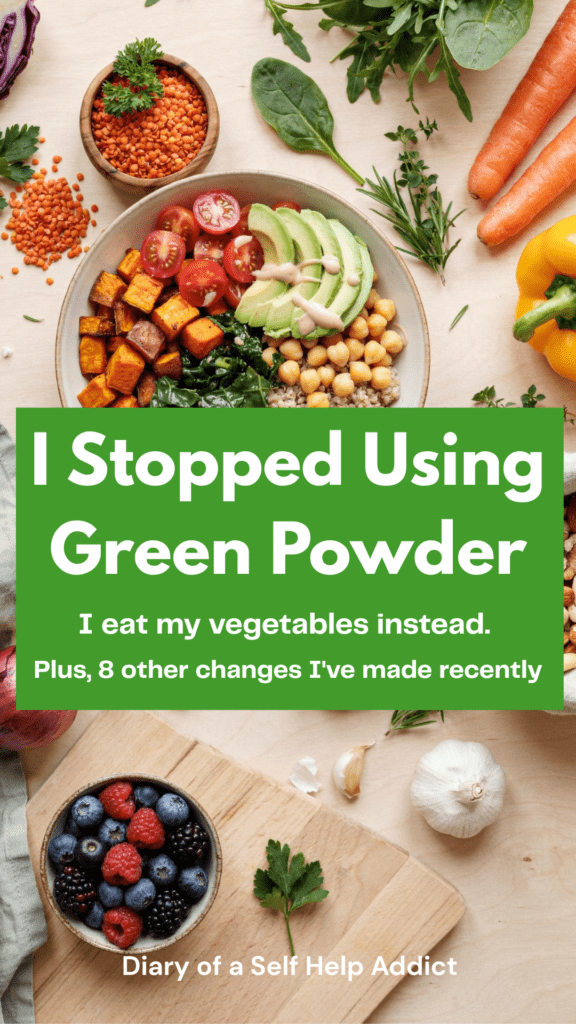
But I’ve come to believe that if you want the benefits of vegetables, the best place to get them is from actual vegetables.
I don’t use a greens powder, and I’d much rather eat a big salad, roasted vegetables, sautéed greens, broccoli, cabbage, carrots, peppers, or whatever colorful produce happens to be in my kitchen.
Whole vegetables, including dark leafy greens, give you so much more than a list of vitamins and minerals. They provide fiber, water, phytonutrients, and a variety of beneficial plant compounds, along with the satisfaction of actually eating food.
Same Goes For Fiber…
And fiber is particularly important. We’ve learned a lot in recent years about the important role adequate fiber plays in gut and colon health, blood sugar regulation, heart health, and overall health.
I don’t personally take a fiber supplement because I get plenty of fiber from the foods I eat. But if someone isn’t getting enough fiber, I think a high-quality fiber supplement can be a useful tool to bridge that gap.
Ideally, we should get most of our fiber from whole foods—vegetables, fruits, beans, lentils, whole grains, nuts, and seeds. But if you’re consistently falling short, adding a fiber supplement is certainly more practical than simply hoping you’re getting enough.
To me, there’s an important distinction when it comes to supplements in general:
Neither a greens powder nor a fiber supplement should replace good nutrition from whole foods. Supplements are there to supplement your diet, not to make up for a diet that’s missing the basics.
If you’re eating plenty of vegetables and getting enough fiber from your food, you may not need either one. If you’re consistently falling short in a particular area, that’s when supplementation can make sense.
So for me, instead of spending money on a tub of green powder and convincing myself that I’ve “had my vegetables” for the day, I’d rather spend that money at the grocery store or farmers market. Give me the actual broccoli. 🥦
My takeaway: Eat your vegetables. Get your greens and fiber from whole foods whenever you can. And use supplements to fill a genuine nutritional gap, not as a substitute for a healthy diet.
4. I Don’t Rely on Protein Bars and Protein Powders
Protein bars and powders can be incredibly convenient, and I’m not saying they are inherently unhealthy.
They can be useful for travel, busy days, workouts, or situations when getting enough protein from food is difficult. But they used to feel much more necessary to me. Now, I prefer to think about protein as part of my meals.
Beans. Lentils. Tofu. Tempeh. Edamame. Nuts and seeds. Whole grains. Other minimally processed protein sources can also contribute to a balanced diet.
I would rather build a meal that contains protein, fiber, carbohydrates, healthy fats, and plenty of plants than depend on a bar or shake to check the “protein” box.
And there’s another reason I’ve moved away from them: whole foods are more than a single nutrient.
A food isn’t valuable simply because it contains a certain number of grams of protein.
My Takeaway: I want the fiber. The micronutrients. The texture. The variety. The satisfaction of actually eating a meal. Again, convenience has its place. I’m not anti-protein powder or protein bars. I just don’t want them to become the foundation of my diet.
5. I Don’t Believe I Need to Eat Every Few Hours
For years, I heard the advice to eat small, frequent meals throughout the day to “keep my metabolism going.” That meant breakfast, snack, lunch, snack, dinner… and sometimes another snack.
Now, I’m much more comfortable allowing my meals to be meals. I’ve become interested in intermittent fasting and time-restricted eating, not as another diet but as a way to simplify my eating.
For me, something is appealing about not constantly thinking about food.
That said, I don’t believe everyone needs to fast, and I don’t think longer fasting periods are automatically healthier. Your nutritional needs, medications, activity level, age, pregnancy status, medical conditions, and relationship with food all matter.
For some people, structured fasting may not be appropriate at all. I’m simply saying that I no longer feel like I have to eat every two or three hours to “keep my metabolism working.” I pay attention to hunger, fullness, energy, and what works with my schedule.
My takeaway: You don’t have to constantly eat to be healthy. Find an eating pattern that provides adequate nutrition and works for your body and lifestyle.
6. I Don’t Keep My Phone Next to My Bed
This is one of my favorite changes because it has less to do with another wellness product and more to do with creating a better sleep environment.
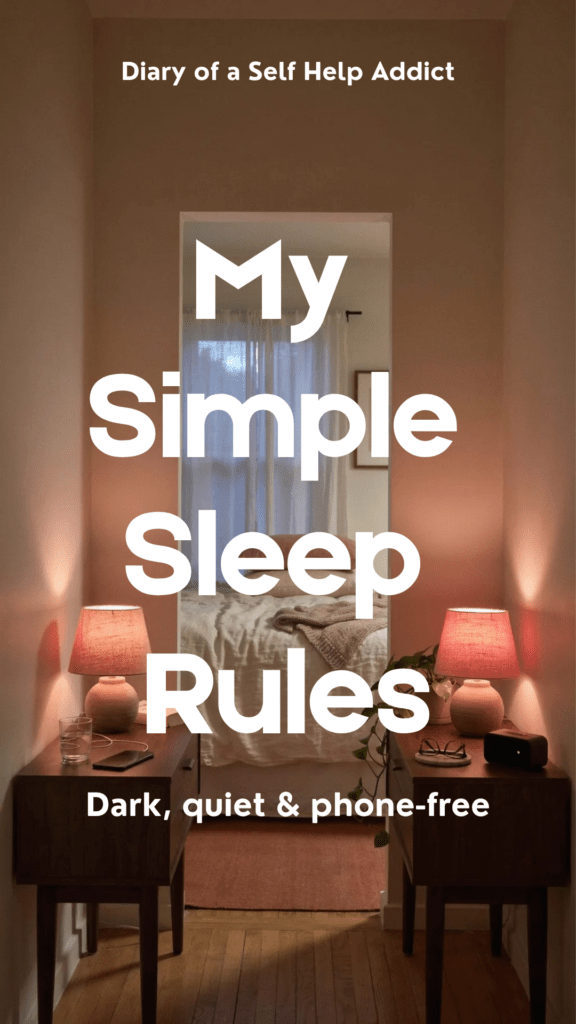
I don’t want my phone sitting beside my pillow while I sleep.
For me, the biggest benefit is psychological: I’m less tempted to reach for it.
No scrolling. No checking social media. No seeing an email come in. No waking up at 2 a.m. and suddenly deciding I need to know the answer to some completely random question.
Ideally, my phone is outside the bedroom. If that’s not practical, I at least put it on airplane mode at night and keep it out of reach.
I’m not making dramatic claims about phones or wireless signals. I like creating some separation between myself and my device.
My bedroom is for sleeping, not for carrying the entire internet into bed with me.
My takeaway: Create some separation between yourself and your phone at night. Even if you can’t leave it outside the bedroom, putting it in airplane mode and keeping it out of reach can help make bedtime about sleep rather than scrolling.
7. I Don’t Sleep With Lights Everywhere
This is another change that has made my nighttime environment much calmer.
I prefer my bedroom to be dark. Really dark.
I cover little green, blue, and red indicator lights on electronics. The air purifier? Covered. Random little charging lights? Covered. Anything glowing across the room? If I don’t need to see it at night, I don’t want it shining in my eyes.
Even the digital clock I use has a feature that lets me turn off the display light. And I love it.
But I don’t want to stumble around in complete darkness either. My nightstand lamps have red/pink Himalayan salt light bulbs, which give off a very soft, warm glow when I need a little light in the evening.
And if I need light at night, I prefer a dim nightlight that turns on when I walk by rather than leaving a light on all night.
The goal isn’t to become obsessive about darkness. It’s simply about making the bedroom a place that signals sleep and relaxation.
Our modern homes can be surprisingly bright at night. TVs, phones, clocks, appliances, chargers, electronics, and outdoor lighting can all contribute.
So I’ve made my bedroom as dark and peaceful as reasonably possible while still keeping it comfortable and functional.
My takeaway: Keep your bedroom as dark as you comfortably can at night. Cover those little glowing lights, turn off digital displays, and if you need a little illumination, choose a very dim, warm or red light rather than bright overhead lighting.
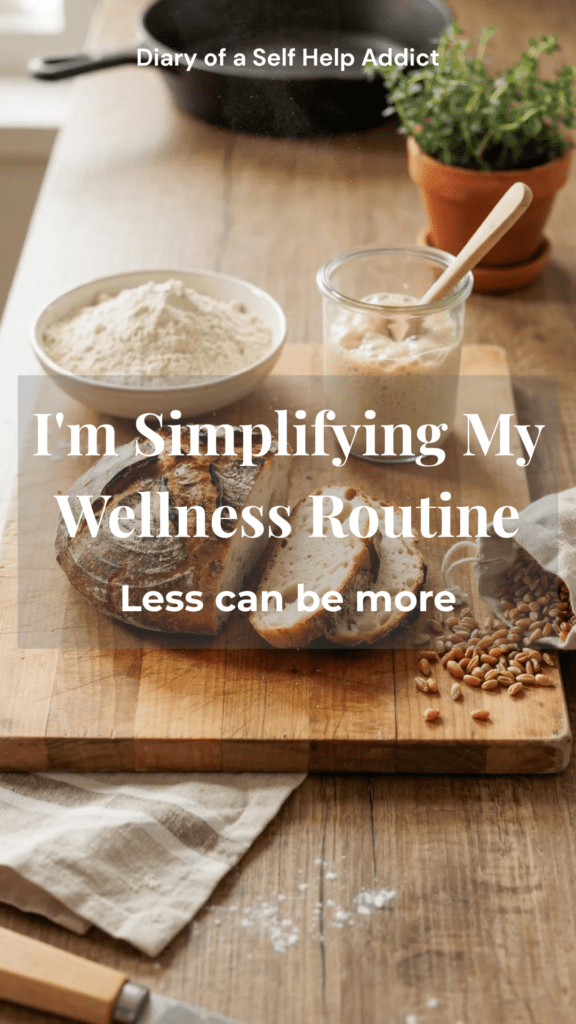
8. I Don’t Buy Much Store-Bought Bread Anymore
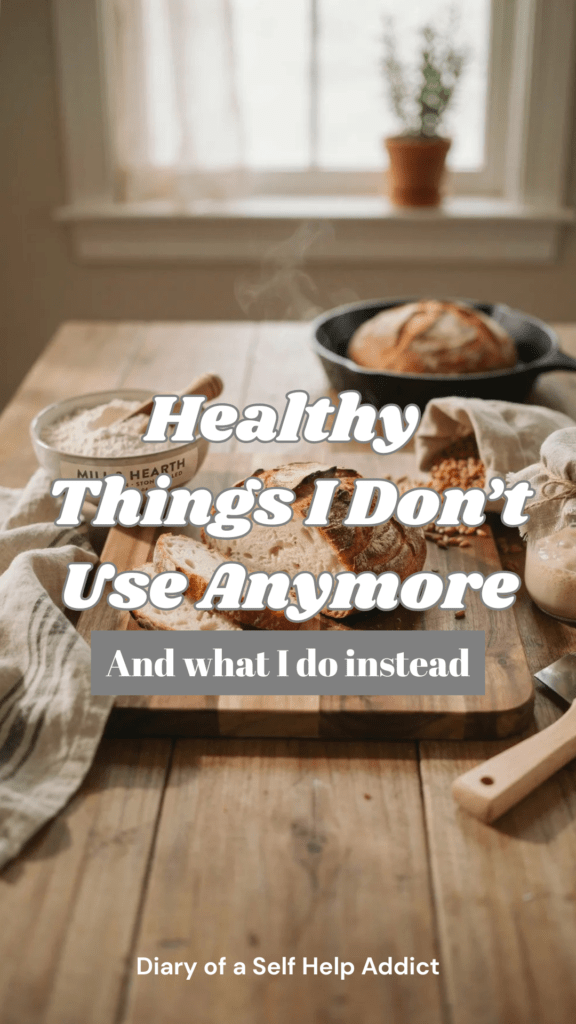
This may be one of my favorite changes of all. I make sourdough.
And when I have the time, I prefer making it with freshly milled flour.
There is something completely different about homemade bread when you know exactly what went into it.
Flour. Water. Starter. Salt. That’s it.
I love experimenting with different grains and freshly milled flour, and I love knowing that I’m not buying a loaf simply because the package has a bunch of words on it that make it sound healthy.
This doesn’t mean all store-bought bread is bad. There are plenty of good options, and I’m certainly not suggesting everyone needs to start maintaining a sourdough starter.
But homemade sourdough has become one of those simple pleasures that fits perfectly with the way I want to eat.
And fresh-milled flour is especially appealing to me because I enjoy using whole grains and milling them myself.
There’s also something incredibly satisfying about taking a few simple ingredients and turning them into a beautiful loaf of bread.
My takeaway: Homemade bread doesn’t have to be complicated, and when you make it yourself, you know exactly what’s going into it. For me, homemade sourdough (especially with freshly milled flour) is worth the effort.
9. I Don’t Wear a Smartwatch
I know a lot of people love their smartwatches. They track steps, workouts, heart rate, sleep, notifications, and just about everything else you can imagine.
I’ve chosen not to wear one.
For me, it comes down to wanting less technology attached to my body. I don’t feel the need to have constant notifications, tracking, or another device communicating with me throughout the day. I’m also personally more comfortable minimizing my exposure to electromagnetic fields (EMFs) where it’s practical for me.
Do I need to know my heart rate every minute of the day? How many steps I’ve taken at this exact moment? Or have my texts buzzing on my wrist?
Probably not.
I’d rather move my body, pay attention to how I feel, and enjoy being present without another device monitoring me.
My takeaway: Technology can be incredibly useful, but I don’t need to wear it 24/7. For me, less tracking, fewer notifications, and less technology attached to my body feels better.
10. I’m Less Interested in “Perfect” Wellness
Maybe this is the biggest change of all. I used to think healthy living required doing everything correctly.
The perfect supplement routine. The perfect workout. The perfect diet. The perfect morning routine. The perfect sleep routine. The perfect superfood.
But the older I get, the more I realize that health isn’t about doing a thousand tiny things perfectly. It’s about consistently doing the important things.
- Eat mostly real food.
- Eat plenty of plants.
- Get enough protein and fiber.
- Move your body.
- Build strength.
- Get outside.
- Sleep.
- Manage stress.
- Drink water.
- Have relationships.
- Laugh.
- Enjoy your food.
And don’t make yourself crazy trying to optimize every single minute of your day.
My takeaway: Healthy living doesn’t have to be complicated or perfect. Focus on the basics you can consistently do, and don’t let the pursuit of wellness become another source of stress.
The Healthier Life I’m Creating Now
Interestingly, removing things has made healthy living feel much easier.
I don’t need…
- A green powder to feel like I’m eating vegetables.
- A protein bar every afternoon because I’m terrified I’m not getting enough protein.
- Ice water because I think it is somehow superior.
- A cabinet overflowing with supplements.
- To eat six tiny meals a day.
- My phone next to my pillow.
- And I don’t need a bedroom glowing like a miniature electronics store.
Instead, I’m trying to get back to basics. Real food. Simple ingredients. Homemade meals. Movement. Sleep. Fresh air. And consistency. That’s what healthy living looks like for me these days.
And perhaps the biggest lesson I’ve learned is that sometimes improving your health isn’t about adding one more thing. Sometimes it’s about asking: “What can I simplify?” Because when it comes to wellness, more isn’t always better. Sometimes, less really is more.
What Healthy Habits Have You Left Behind?
Maybe, like me, you’ve realized that some of the things you once thought were “healthy” just don’t make sense for you anymore.
Maybe you’re ready to simplify your supplement cabinet, eat more actual vegetables, rethink your protein bars, create a better sleep environment, or finally try making your own sourdough.
I’d love to hear from you!
What’s one “healthy” thing you’ve stopped doing, and what do you do instead?
Leave a comment below and share what’s working for you. You might give someone else an idea for simplifying their own wellness routine!
And if you enjoyed this post, share it with a friend who loves all things health and wellness. Sometimes the healthiest change isn’t adding one more thing—it’s realizing we don’t need to do it all.
A Quick Disclaimer
This post is based on my personal experiences, preferences, and what I’ve learned along my own wellness journey. I’m sharing what works for me, not telling you what you should or shouldn’t do.
Everyone’s nutritional needs, health history, medications, and circumstances are different. Some of the things I mention—particularly supplements, fiber, intermittent fasting, and sleep habits—may not be appropriate for everyone.
Please don’t take my personal routine as medical advice. Talk with your doctor, registered dietitian, or other qualified healthcare professional before making significant changes to your diet, supplements, fasting routine, or other aspects of your health.
Pin it for later
Leave a Reply