
Iodine is a vital mineral that often doesn’t get the attention it deserves, yet it plays a crucial role in our overall health, especially for thyroid function. Whether you’re curious about adding iodine to your wellness routine or want to understand its impact on your body, this guide will cover everything you need to know—from benefits and risks to foods that contain iodine and how to use it effectively.
What Is Iodine?
Iodine is a trace element, meaning the body needs only small amounts. Despite its tiny requirement, it is essential for the production of thyroid hormones, which regulate metabolism, growth, and development. These hormones—thyroxine (T4) and triiodothyronine (T3)—affect nearly every cell in the body.
Without enough iodine, the thyroid cannot produce sufficient hormones, which can lead to a range of health issues, including fatigue, weight changes, and developmental problems in children.
DISCLAIMER: SOME OF THE LINKS IN THIS POST ARE AMAZON AFFILIATE LINKS. IF YOU PURCHASE THROUGH THEM, I MAY EARN A SMALL COMMISSION AT NO EXTRA COST TO YOU. I ONLY RECOMMEND PRODUCTS I TRUST OR THAT HAVE SOLID VALUE.
How Iodine Supports Thyroid Function
Your thyroid gland, a butterfly-shaped gland at the base of your neck, uses iodine to make T3 and T4. These hormones regulate:
- Metabolism – controlling how your body uses energy
- Heart function – influencing heart rate and cardiac output
- Brain development – especially critical in infants and children
- Reproductive health – including fertility and menstrual cycles
When iodine levels are low, the thyroid may enlarge in an effort to capture more iodine from the bloodstream, leading to a condition called goiter. Conversely, sufficient iodine helps maintain thyroid hormone balance, supporting energy, mood, and overall metabolic health.
Related Read: THE MOST CONTROVERSIAL THING I’VE TRIED FOR FROZEN SHOULDER (AND WHY IT WORKED)

Symptoms of Low Iodine
Iodine deficiency can present in subtle ways or more noticeable symptoms. Common signs include:
- Fatigue or low energy
- Weight gain despite no change in diet
- Feeling cold easily
- Hair thinning or hair loss
- Dry skin
- Swelling in the neck (goiter)
- Slow heart rate
- Cognitive issues such as brain fog or poor concentration
Infants and children with severe iodine deficiency may experience developmental delays and growth issues.
Symptoms of High Iodine
While iodine is essential, too much can also cause health problems. Excessive iodine intake may lead to:
- Hyperthyroidism (overactive thyroid)
- Hypothyroidism (paradoxically, in some cases)
- Metallic taste in the mouth
- Burning sensations in the mouth or throat
- Skin rashes
- Swelling or inflammation of the salivary glands
Maintaining a balanced iodine intake is key. Your body can usually handle moderate variations, but extremely high doses—especially from supplements—can cause complications.
How to Get Iodine
1. Foods Rich in Iodine
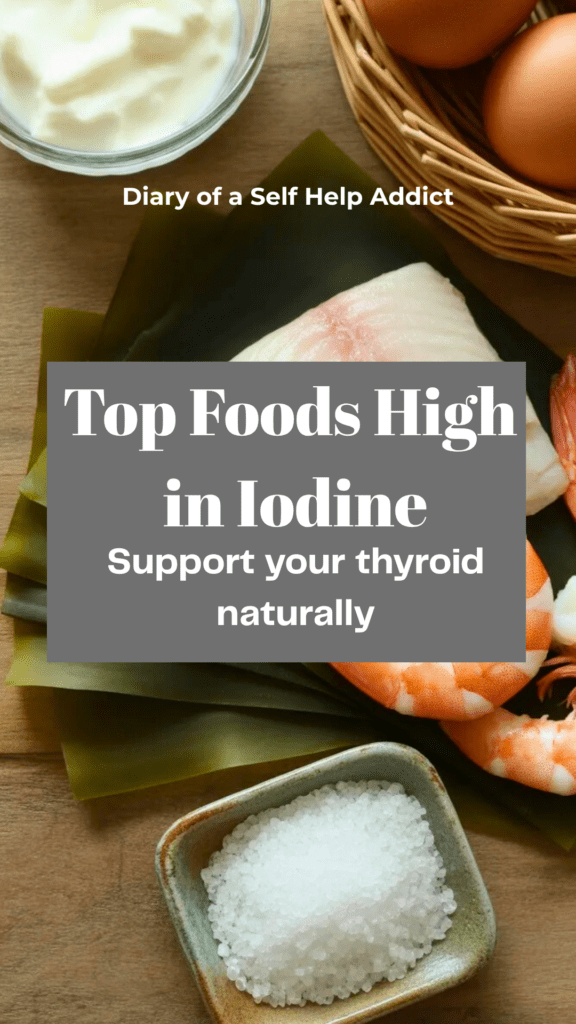
Iodine is naturally present in several foods, particularly seafood and dairy. Key sources include:
- Seaweed (kelp, nori, wakame) – one of the richest natural sources
- Fish (cod, tuna, shrimp)
- Dairy products (milk, yogurt, cheese)
- Eggs (especially the yolk)
- Iodized salt – a common source in many countries
- Dulse, a red seaweed, is a popular, slightly milder-tasting option than kelp. It can be eaten dried as a snack, added to salads, or sprinkled over meals for an easy iodine boost.
Important to note that seaweeds’ iodine content can vary depending on where they’re harvested, so they’re best consumed in moderation.
The recommended daily allowance (RDA) varies by age, sex, and life stage:
- Adults: 150 mcg/day
- Pregnant women: 220 mcg/day
- Breastfeeding women: 290 mcg/day
2. Iodine Supplements
For those who may not get enough iodine from diet alone, supplements can be useful. Common forms include:
- Lugol’s iodine – a liquid iodine solution
- Potassium iodide tablets
- Multivitamins containing iodine
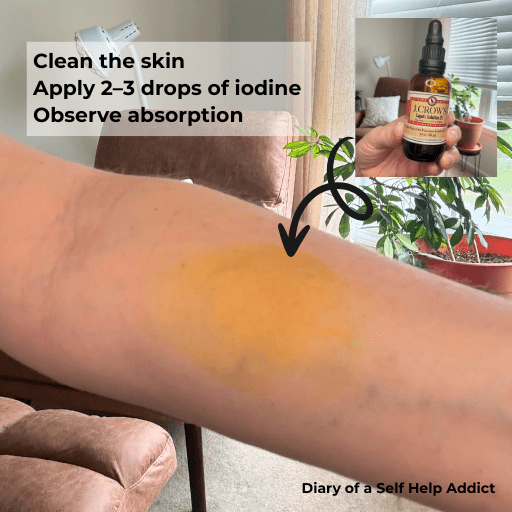
I personally use a few drops of Lugol’s iodine on my forearm daily. Here’s how I monitor my intake:
- If the orange/brown mark absorbs quickly, it indicates that my body needs more iodine, and I may continue supplementation.
- If the mark lasts several hours, my iodine levels are likely sufficient, and I may skip applying iodine the next day.
This method, while not a substitute for lab testing, gives a practical, at-home way to gauge your iodine needs.
Benefits of Iodine
Adequate iodine levels can support numerous aspects of health:
- Thyroid health – critical for hormone production and metabolism
- Brain function – supports cognition and mental clarity.
- Immune system support – helps the body fight infections.
- Skin and hair health – promotes cell regeneration.
- Hormonal balance – particularly important for reproductive health
Some research also suggests that iodine has antioxidant properties and may support healthy breast tissue in women.
Risks of Iodine
Like anything, iodine comes with potential risks if not used appropriately:
- Excess supplementation can trigger thyroid dysfunction.
- People with autoimmune thyroid disease (like Hashimoto’s or Graves’ disease) may experience flare-ups with high iodine doses.
- Topical application is generally safe but should be avoided on broken or irritated skin.
Always start with the recommended dosage and consult with a healthcare provider, especially if you have thyroid conditions or are pregnant.
Related Read: Types of Magnesium: Benefits, Differences, and Which One You Should Take

How to Use Lugol’s Iodine Safely
If you’re using Lugol’s iodine topically, here’s a step-by-step guide:
- Clean the skin – choose a small, hairless area, such as your forearm.
- Apply 2–3 drops of iodine solution, and rub it in.
- Observe absorption – if the brown stain disappears within an hour, your body may need more iodine. If it remains for several hours, you likely have enough.
- Frequency – daily or every other day, depending on absorption and dietary intake.
- Avoid overuse – excessive topical iodine can irritate the skin or lead to systemic overload.
For oral supplementation, follow the product guidelines and consult a medical professional.
Monitoring Your Iodine Levels
Although the forearm “staining” method provides a quick home check, lab tests are the most accurate way to assess iodine status. Healthcare providers may check:
- Urinary iodine concentration – reflects recent iodine intake.
- Thyroid function tests (TSH, T3, T4) – indicate how well your thyroid is working.
A Special Note About Hashimoto’s Thyroiditis and Iodine
While iodine is essential for thyroid hormone production, individuals with Hashimoto’s thyroiditis should be cautious with iodine supplementation.
Hashimoto’s is an autoimmune condition in which the immune system mistakenly attacks the thyroid gland. Over time, this immune attack can damage thyroid tissue and reduce the gland’s ability to produce hormones, often leading to Hypothyroidism.
In people with Hashimoto’s, excess iodine can actually worsen the autoimmune response. Research suggests that high iodine intake may:
- Increase inflammation within the thyroid.
- Trigger or worsen autoimmune thyroid attacks
- Accelerate the destruction of thyroid tissue.
- Potentially worsen symptoms of hypothyroidism.
This happens because iodine is involved in thyroid hormone production. When iodine levels suddenly increase, the thyroid may produce more hormone precursors, which can create oxidative stress within the gland. In individuals with Hashimoto’s, this stress can stimulate immune activity against the thyroid.
For this reason, many endocrinologists recommend that people diagnosed with Hashimoto’s avoid iodine supplements unless specifically directed by their doctor. Most individuals with the condition can safely obtain the small amount of iodine their body needs through a balanced diet rather than high-dose supplementation.
It’s also important to understand that not all thyroid conditions are the same. Some thyroid disorders may involve iodine deficiency, while others involve autoimmune processes in which excess iodine could worsen symptoms.
If you suspect thyroid issues or have been diagnosed with Hashimoto’s, it’s best to work with a healthcare professional to evaluate your iodine intake and thyroid function before supplementing.
Kelly’s Thoughts
Iodine is a small mineral with a massive impact. From supporting thyroid function and metabolism to contributing to brain and skin health, it’s essential to get enough, but not too much. Whether through diet, supplements, or topical applications such as Lugol’s iodine, careful monitoring of intake is key.
Remember, your thyroid health is central to overall wellness, so paying attention to iodine and consulting with a healthcare provider can help you maintain balance and prevent both deficiency and excess.
Here’s a link to the iodine supplement I personally use and recommend for quality: Lugol’s iodine 2%. Please note that, as an Amazon Associate, I may earn a small commission if you purchase through this link, at no extra cost to you.
Medical Disclaimer
This blog is for educational purposes only and is not a substitute for medical advice. Always consult a licensed healthcare professional before starting any new supplement or health regimen, especially if you have a thyroid condition, are pregnant, or have other health concerns.
Pin it for later
For more information about how your data is used and protected on this site, please see my Privacy Policy.
Leave a Reply