Guest post by Beth Passehl, MS, E-RYT 200, E-RYT 500, YACEP
After hours in the car, even a quick stop can help you feel a little more like yourself. You don’t need a mat, special clothes, or a long routine. Beth’s reminder is simple: take at least five minutes to notice how you feel and move gently.
Try a few of these stretches when you arrive at your destination, at a rest stop, or even beside your bed. A dresser, chair, table, couch, or folded blanket can give you support.
A note from Kelly: I’m so grateful to Beth for sharing these gentle road-trip recovery ideas with us. I love attending her yoga classes at Strong Tower Pilates Studio on Wednesday and Friday mornings. Beth is incredibly knowledgeable and teaches to the body in front of her, with thoughtful modifications for those of us who need them. If you’d like to join us, you can sign up for a class here.
Start where you are
Before moving, pause for a moment. Notice your breath and any areas that feel stiff or tired. Move slowly, and stay in a range that feels comfortable. These are options, not a checklist—choose one or two that feel good today.
Supported forward fold
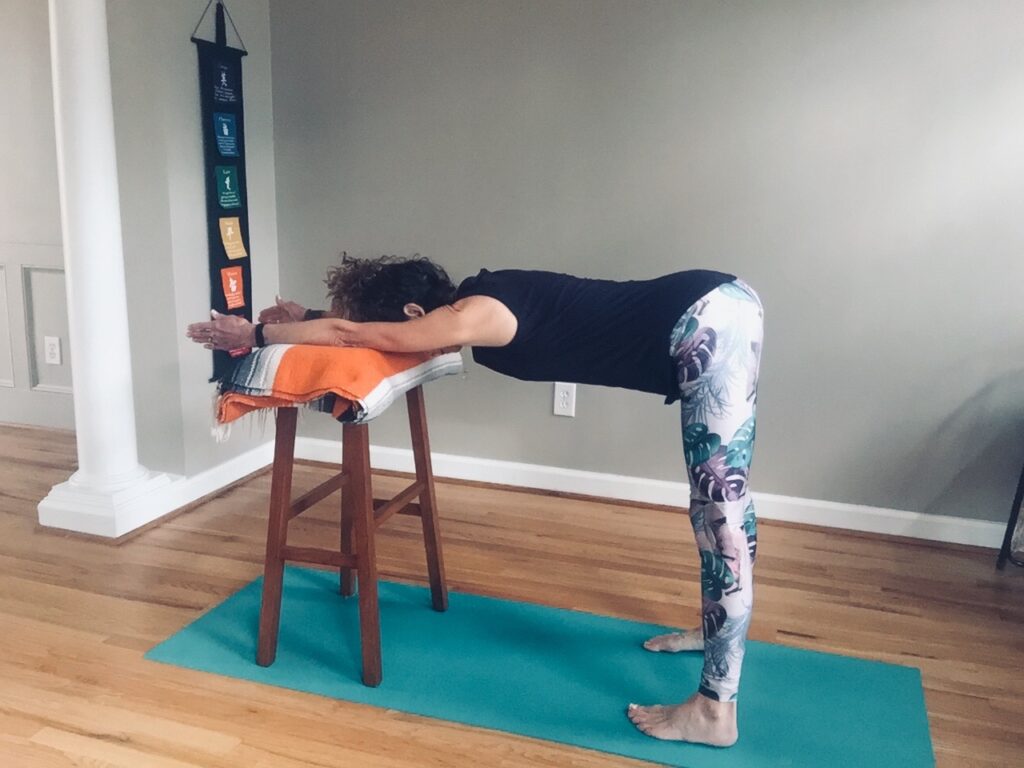
Stand facing a dresser, bed, or sturdy stool. Place your hands or forearms on it, soften your knees, and gently hinge at your hips. Let your upper body rest toward the support as you lengthen your spine.
This supported position can make a forward fold feel more accessible, especially if your hamstrings are tight. Keep your knees as bent as you need.
Downward dog with support
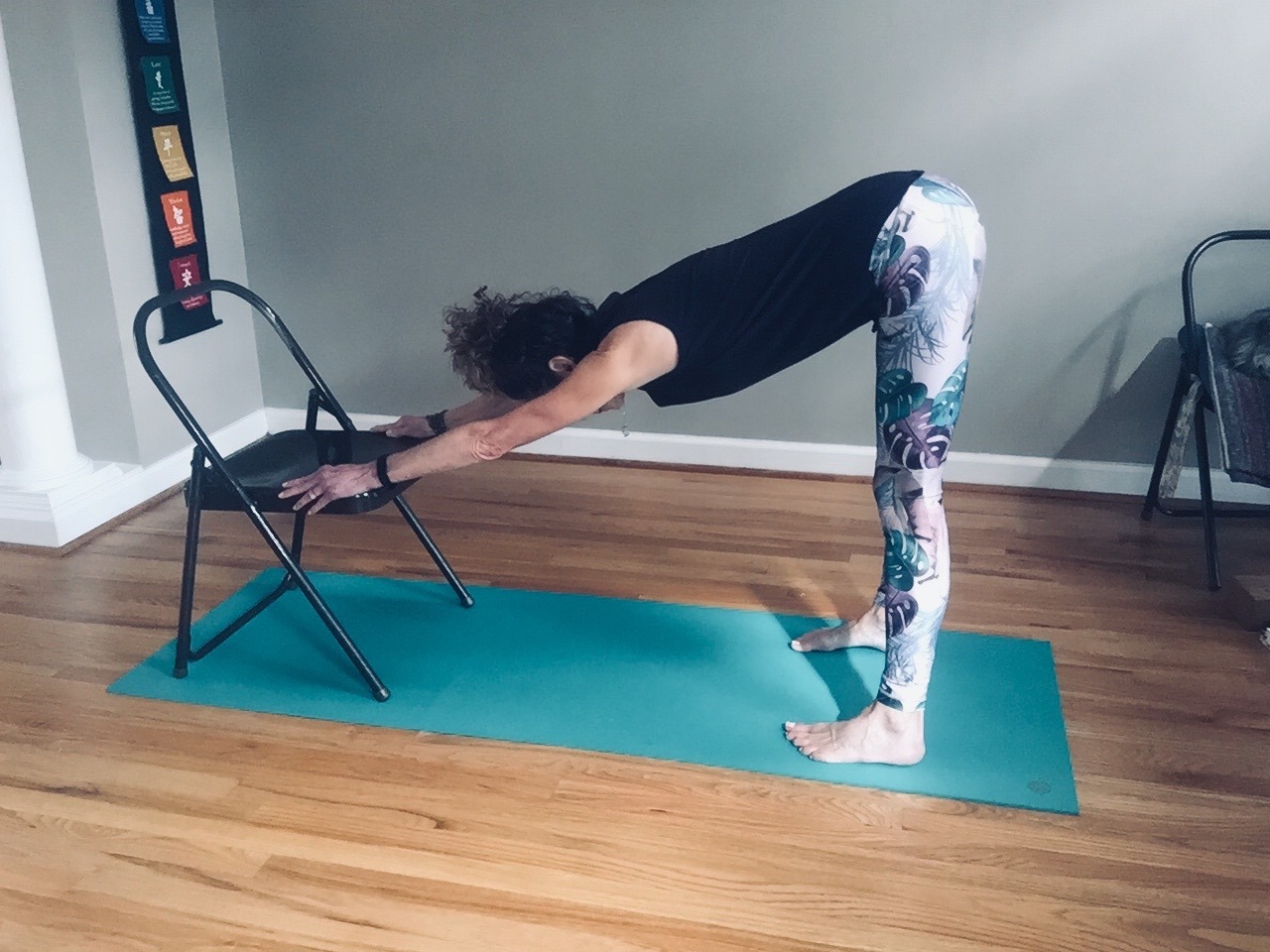
Place your hands on a sturdy chair, table, or bed. Walk your feet back and send your hips gently away from your hands, making a long line through your back. Keep your knees soft.
Downward dog is often called a “great neutralizer” because it stretches and engages the whole body. Using a raised surface lets you adjust the pose to suit how you feel.
Wide-leg forward fold
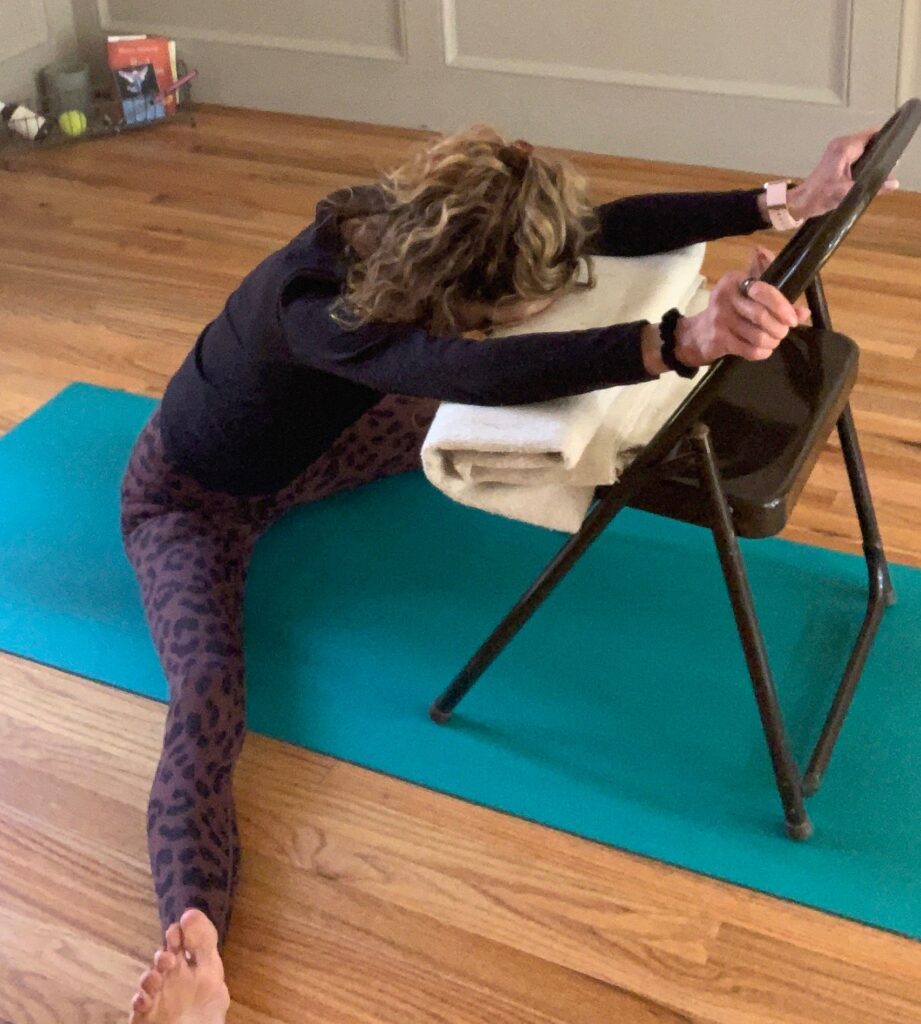
Stand with your feet comfortably apart and your hands on a chair or bed. Bend your knees slightly and fold forward from your hips, allowing the support to hold some of your weight.
There’s no need to go deep. A small, easy fold is plenty.
Eye of the needle
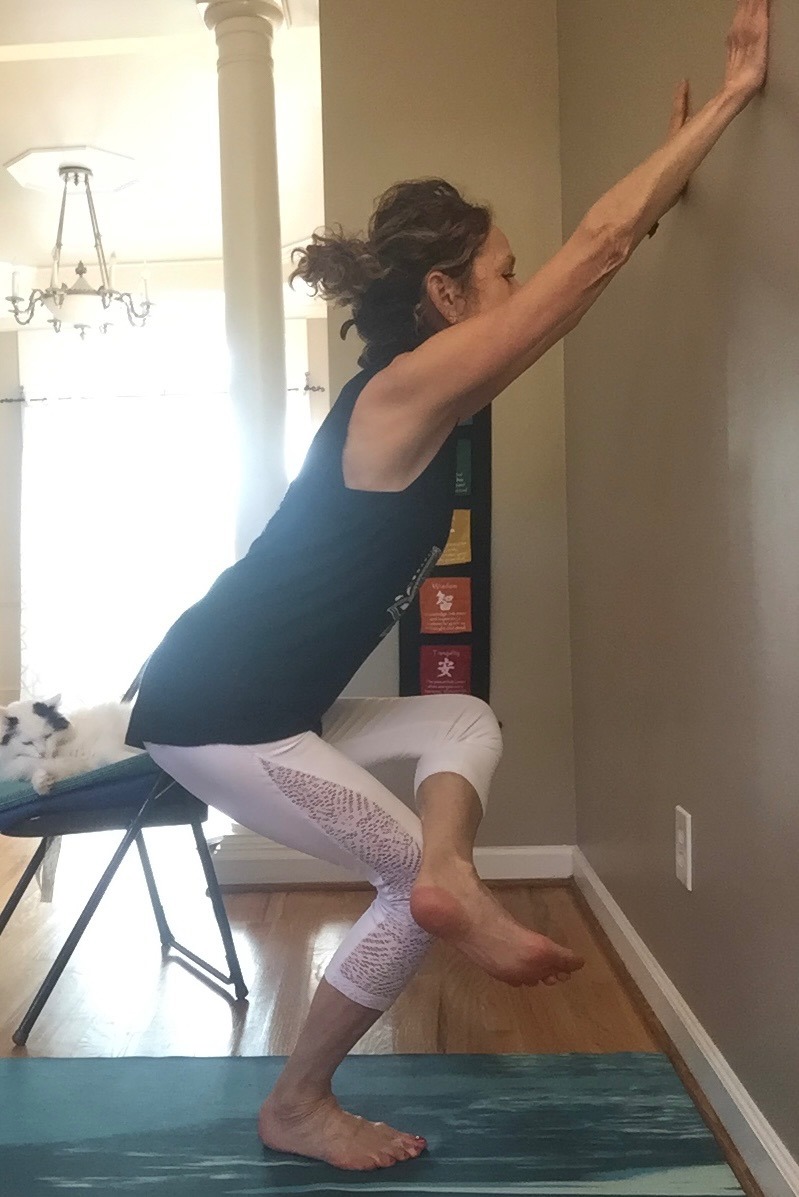
Lie on your back with your knees bent. Rest one ankle across the opposite thigh, then gently draw the supporting leg toward you until you feel a comfortable stretch around your hip. You can also do a seated version in a chair as pictured above: cross your ankle over the opposite thigh and lean forward slightly.
Keep the movement gentle, and switch sides when you’re ready.
Heart-opening rest
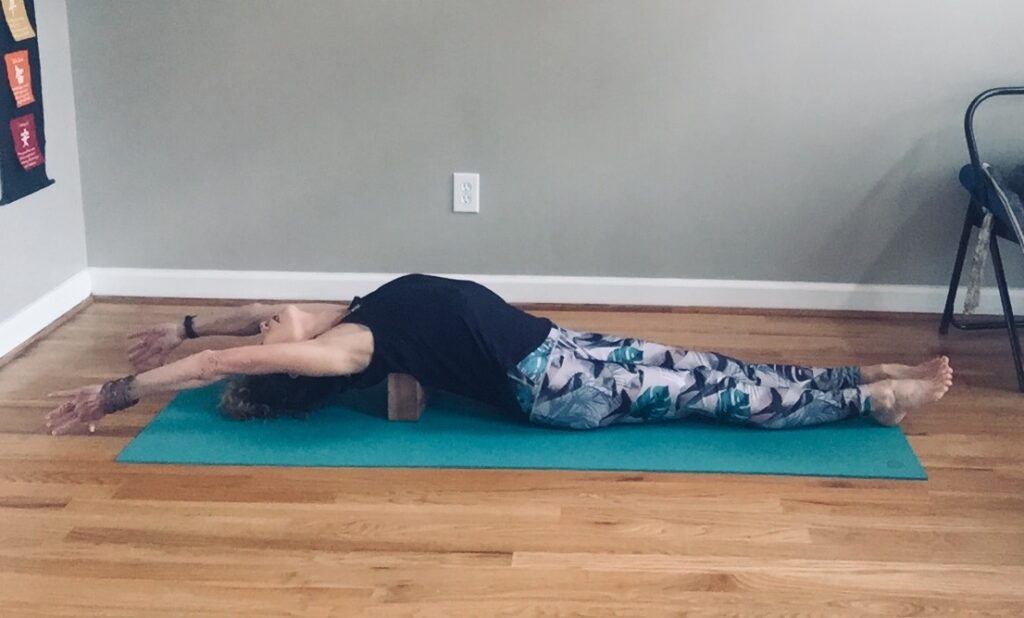
Place a yoga block or folded blanket beneath your upper or middle back, and let your chest open gently. Your knees can be bent or straight—choose whichever feels more comfortable.
Make sure your head and neck feel supported. If this position feels like too much, skip it and choose a more upright stretch.
Gentle seated twist
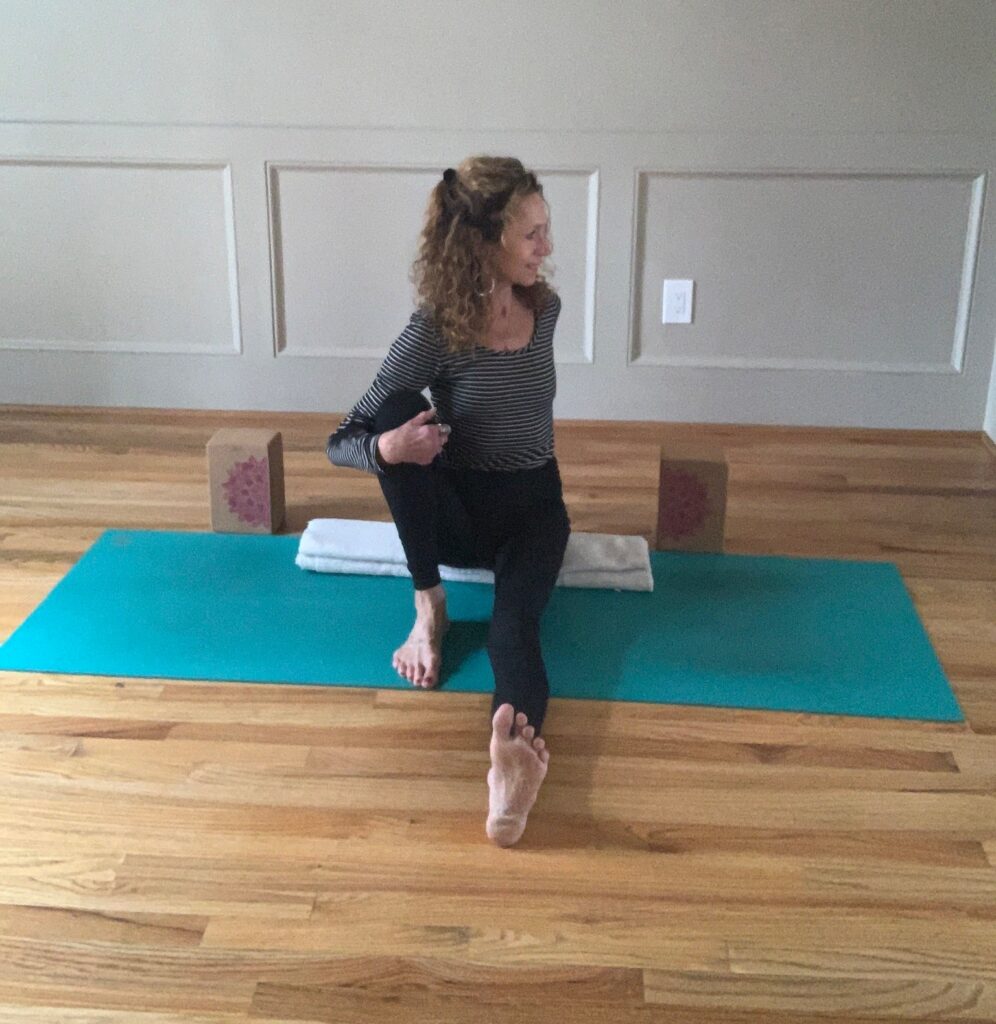
Sit on a folded towel or blanket, with both feet grounded. Sit tall, then slowly turn your chest to one side. Keep the twist easy and let your breath stay relaxed. Return to center and try the other side.
Active rest: legs on the couch or bed
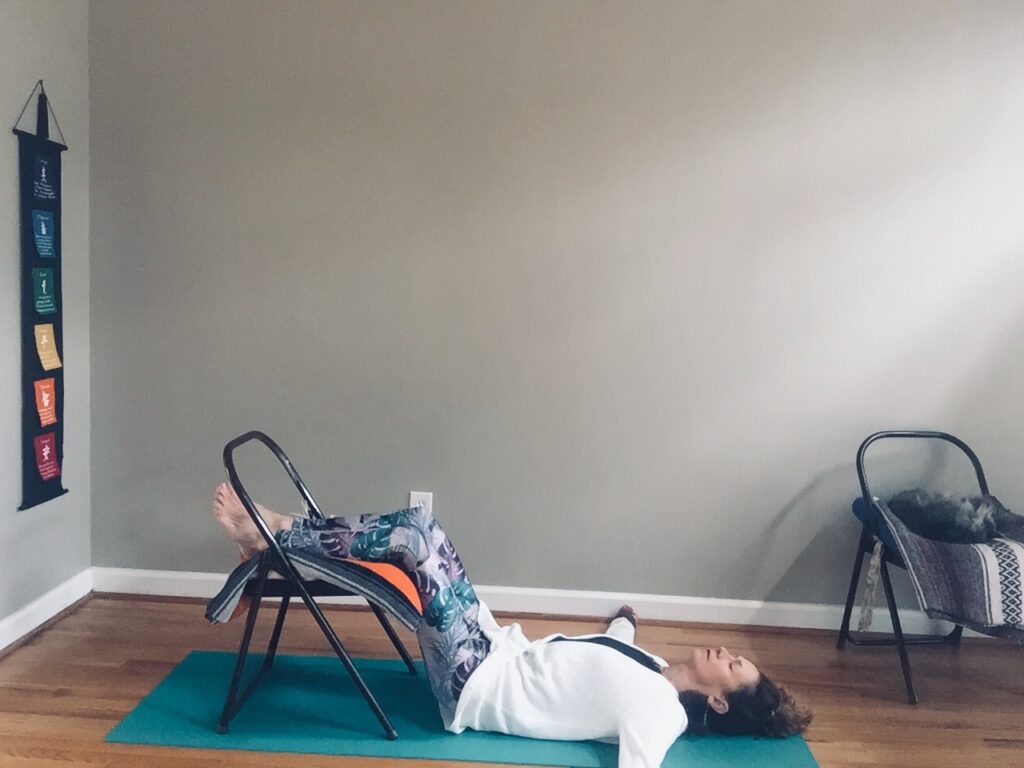
Lie down and rest your legs on a couch or bed. Add a small support beneath your neck if that feels helpful; Beth notes that a travel pillow can work nicely.
Sometimes the most useful reset is simply getting comfortable and letting yourself be still for a few minutes.
A five-minute reset
Short on time? Pick a supported forward fold, a seated twist, and legs-up rest. Spend a little time with each, breathing comfortably and moving only as far as feels good. If you have longer, explore another pose or follow a short practice.
Yoga resources from Beth
- Quick 10-minute routine
- Yoga practice on YouTube
- A practice you can do from bed
- More yoga inspiration from Beth
- Yoga International
A little movement and attention can make a long travel day feel easier to leave behind. Take the five minutes, use whatever support you have, and let comfort guide you.
With love and gratitude to Beth Passehl, MS, E-RYT 200, E-RYT 500, YACEP, for sharing these road-trip recovery ideas with her clients and allowing us to share them here. Find Beth at Beth Passehl Yoga at Heart on Substack.
Move within a comfortable range and use stable support. If a pose causes pain, stop and choose a gentler option.
This guest post is for general educational purposes only. It is not medical advice or individualized yoga instruction. You may need to modify or avoid poses depending on your health, injuries, balance, or pregnancy. If you have concerns about whether these movements are right for you, check with your healthcare provider and a qualified yoga instructor. Use stable support, move within a comfortable range, and stop if a movement causes pain or makes you feel unwell. Don’t use yoga to delay care for a health problem.
Pin it for later
Leave a Reply